
Executing India’s Energy Transition
Execution defines outcomes. It determines whether scale delivers value.
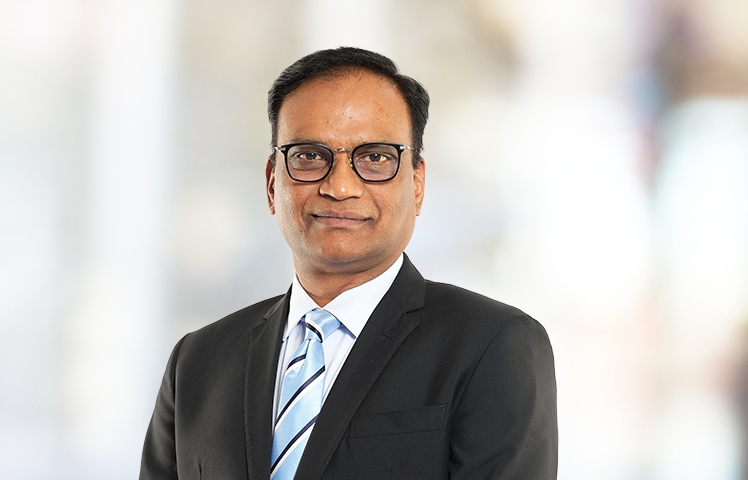
— Kandarp Patel
India’s evolving energy landscape is redefining the scale and sophistication of infrastructure development. Meeting this moment requires faster expansion of critical networks supported by intelligent systems that strengthen reliability and efficiency.
Our journey has been built on developing critical energy infrastructure. Today, that foundation is evolving toward a broader role in enabling India’s energy transition. As we continue to expand our infrastructure platform, our strategic direction is increasingly centred on delivering integrated energy solutions for a transitioning power ecosystem.
Execution remains the central driver of this progress. During the year, disciplined project delivery and operational control translated into tangible milestones across our portfolio. Transmission assets moved into operation, strengthening network capacity. Smart metering scaled rapidly across multiple states. Distribution operations continued to deliver consistent performance, while new energy services began to gain traction. These outcomes reflect the strength of our execution platform and the growing role of digital systems in managing infrastructure at scale.
Scaling Transmission
India’s energy transition is creating one of the world’s largest opportunities for transmission infrastructure. As renewable capacity expands rapidly and power flows increasingly move across regions, resilient and high-capacity networks are becoming critical to maintaining grid stability and enabling reliable power delivery. With nearly one-fifth of India’s private transmission network under our portfolio, we remain well-positioned to support this transition through disciplined execution and operational excellence.
During the year, we strengthened execution momentum with the commissioning of five transmission projects, beginning in the first quarter with Sangod Transmission, Khavda Phase-II Part-A and the Khavda Pooling Station - 1. Execution progress continued with additional network additions of the North Karanpura transmission line. The year culminated with the commissioning of the landmark Mumbai HVDC project, a key milestone enhancing grid resilience and clean energy inflows into the Mumbai Metropolitan Region.
Transmission infrastructure is built across diverse terrains, agricultural land, forest corridors, and critical infrastructure crossings. Delivering projects in such environments demands strong engineering capability, disciplined project management, and effective stakeholder coordination. Our operating systems and processes are designed to manage these complexities effectively.
Technology continues to accelerate infrastructure delivery. Mechanised tower erection, drone-based conductor stringing, and digital monitoring systems are helping improve project speed, safety, and cost control. At the same time, grid modernisation initiatives and advanced transmission technologies are strengthening the network’s ability to absorb rising renewable energy flows.
Operational performance remained strong during the year. Average system availability maintained at 99.7%, supported by robust O&M practices. High line availability translated into incentive income of ₹ 136 crore in FY 2025-26, reflecting disciplined asset management.
We continued to expand our growth runway through selective project wins. The KPS-III (Khavda South Olpad) HVDC and South Kalamb Power Project win increased our transmission under-construction pipeline to ₹ 71,779 crore across 13 projects. With near-term bidding opportunities and expanding demand from industrial growth and emerging digital infrastructure such as large-scale data centres, the sector offers strong long-term visibility.

Digital intelligence is increasingly shaping how energy infra solutions are delivered.
Strengthening the Distribution Platform
Our distribution business continues to anchor the platform. Stable operations, disciplined capital deployment, and consistent network management provide a reliable base for long-term value creation. As of FY 2025-26, Adani Electricity Mumbai Limited’s Regulated Asset Base (RAB) stood at ₹ 10,521 crore, reflecting 10% y-o-y increase. The progress strengthens our foundation to develop adjacent capabilities across the portfolio and move closer to customers through integrated energy solutions.
We have evolved our Energy Solutions Platform business into an end-to-end energy management platform, helping enterprises optimise power sourcing across multiple energy streams, including grid supply, renewables, and captive generation. Regulatory expertise, digital tools, and energy portfolio management capabilities enable us to support customers in improving cost efficiency while advancing their transition towards greener energy consumption.
Digital intelligence is increasingly shaping how these solutions are delivered. Data-led forecasting, demand optimisation, and automated energy management systems are enabling more efficient power allocation and improved planning. These capabilities allow us to design energy solutions to meet the evolving consumption patterns and regulatory dynamics.
Our integrated ecosystem across generation, transmission, and distribution further strengthens our ability to deliver reliable energy solutions at scale. Leveraging this platform, the business currently services an aggregate load of around 1,789 MW across Adani portfolio companies and external customers, with a clear pathway for continued growth.
During the year, we achieved a significant milestone with the installation of more than 10 million smart meters across multiple states.
Advancing Digital Energy Infrastructure
Smart metering has emerged as a critical pillar in the digital transformation of India’s power sector. During the year, we achieved a significant milestone with the installation of more than 10 million smart meters across multiple states. Execution at this scale requires robust systems and disciplined processes. Digital platforms now support every stage of the deployment cycle, from planning and resource management to installation, quality control, and ongoing service monitoring. The capabilities enable us to maintain strong governance, high installation accuracy, and efficient asset management while operating across diverse geographies.
Beyond execution, smart meters are laying the groundwork for the next phase of power sector innovation. The data generated through these systems enable utilities to implement dynamic tariffs, improve demand-side management, and create new energy market opportunities. Over time, these capabilities will allow consumers to participate more actively in energy ecosystems through mechanisms such as peer-to-peer power exchange and flexible consumption models.
Expanding Next-generation Energy Services
Cooling demand is expected to grow rapidly as urbanisation accelerates and climate patterns evolve. Conventional cooling systems, if deployed at scale, could significantly increase electricity demand and place additional pressure on power infrastructure. Cooling systems present a more sustainable alternative by centralising cooling production and delivering it efficiently across multiple buildings and urban developments.
We have built early capabilities in this emerging segment. Following the successful pilot at Shantigram, Ahmedabad, we have expanded our cooling portfolio to approximately 76,000 TR (Tonne of Refrigeration) under implementation, including the development of one of India’s largest cooling facilities at Mundra.
A growing pipeline of projects across airports, large townships, and commercial developments further strengthens long-term visibility for this business.
Technology will play an increasingly important role in this segment. Advanced monitoring platforms, digital twins, and AI-driven optimisation tools are being integrated into our cooling systems to enhance operational efficiency and enable predictive demand management. The capabilities will allow us to deliver reliable, energy-efficient cooling solutions for large-scale urban developments.
As awareness and policy support for sustainable urban infrastructure continue to grow, cooling solutions is expected to become an important component of future city planning. Adani Energy Solutions is well-positioned to participate in this transition by combining infrastructure capabilities with intelligent system design.
Execution with Robust Performance
Financial performance during the year reflected the cumulative impact of disciplined execution across the portfolio. Total income reached ₹ 28,325 crore during FY 2025-26, representing a year-on-year growth of 16%. This growth was supported by stable operating performance across businesses and higher service concession arrangement income as commissioned assets began contributing.
Operational revenue strengthened as execution translated into earnings. The operational revenue rose to ₹ 18,296 crore during the period, driven by contributions from recently operationalised transmission assets and the expanding smart metering base. Assets moved from construction to revenue generation in a planned manner, improving earnings visibility and reducing volatility.
Operating momentum flowed through to profitability. EBITDA recorded double-digit growth, supported by strong performance in transmission and smart metering and steady contribution from distribution and other segments. Transmission margins improved further, with operating EBITDA margins reaching 92%, reflecting asset quality and disciplined O&M practices. Adjusted profit after tax increased by 32% to ₹ 2,393 crore, reflecting the underlying strength of earnings after normalising for prior-period tax impacts.
Strong operating performance was complemented by efficient capital management. We continued to maintain access to long-tenor, low-cost capital aligned with asset lives, supporting predictable cash flows and balance sheet resilience. Our capital framework prioritises duration matching, funding diversity, and cost optimisation. This discipline underpins our international investment grade ratings of BBB-/Stable from Fitch, Baa3/Stable from Moody’s and BBB+/Stable from Japan Credit Rating Agency, reinforcing lender confidence and financial flexibility. These strengths allow us to fund growth at scale while preserving credit quality and long-term stability.
As India’s energy system evolves, our focus will remain on delivery, reliability, and responsibility.
Responsible Growth
Growth at our scale demands responsibility in execution. Safety remains a non-negotiable priority across operations. During the year, we strengthened safety culture through structured training, digital monitoring, and consistent engagement at project sites. More than ~2 lakh man-hours of safety training were conducted during FY 2025-26. Our focus on near-miss reporting, safety dialogues, and preventive audits continues to reinforce awareness and accountability across operations.
Our approach to sustainability is anchored in governance and measurable outcomes. We operate within a clearly defined ESG framework aligned with global standards, including IFRS S1 and S2, the Integrated Reporting Framework, GRI, and the UN Sustainable Development Goals. During the year, we sustained progress across environmental priorities. Renewable energy share has been increased in the total power procurement. GHG emission intensity reduction targets have been achieved ahead of schedule. Zero waste to landfill and single-use plastic-free operations are maintained across operational sites. Water stewardship initiatives have enabled net water positive status across locations.
Our social initiatives focus on education, healthcare, livelihoods, and women’s empowerment across operating regions. Structured programmes in skill development, community health, and access to education continue to support long-term social outcomes, aligned with national priorities and UNSDG 2030.
Strong governance underpins these efforts. Board-level oversight through dedicated committees, independent assurance mechanisms, and enhanced disclosures reinforce accountability. Improvements in ESG ratings reflect the progress made in disclosures, practices, and assurance.
Staying the Course
Looking ahead, our priorities remain clear. We will continue to execute with discipline, strengthen our operating platform, and allocate capital with intent. The visibility created through commissioned assets, robust pipelines, and strong balance sheet fundamentals providing confidence in our path forward.
As India’s energy system evolves, our focus will remain on delivery, reliability, and responsibility. These principles guide how we grow, how we manage risk, and how we create long-term value for all stakeholders. With strong systems, committed teams, and clear accountability, we are well-positioned to sustain momentum and progress with confidence.
Kandarp Patel
Whole-time Director and Chief Executive Officer
Adani Energy Solutions Limited