Risks and Opportunities

Intelligent Systems Shaping Risk Management

We follow a robust risk management approach to support sustained, long-term business growth and value creation. Our ISO 31000- and COSO-aligned Enterprise Risk Management (ERM) framework and governance structure apply established practices and tools to identify, assess, and mitigate potential risks and their impacts.

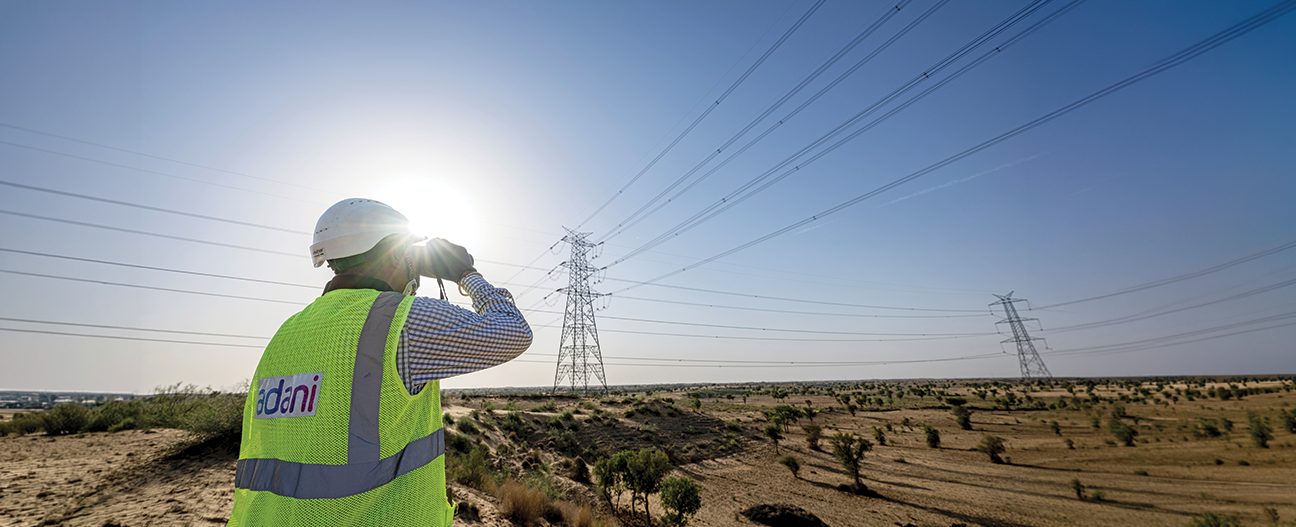
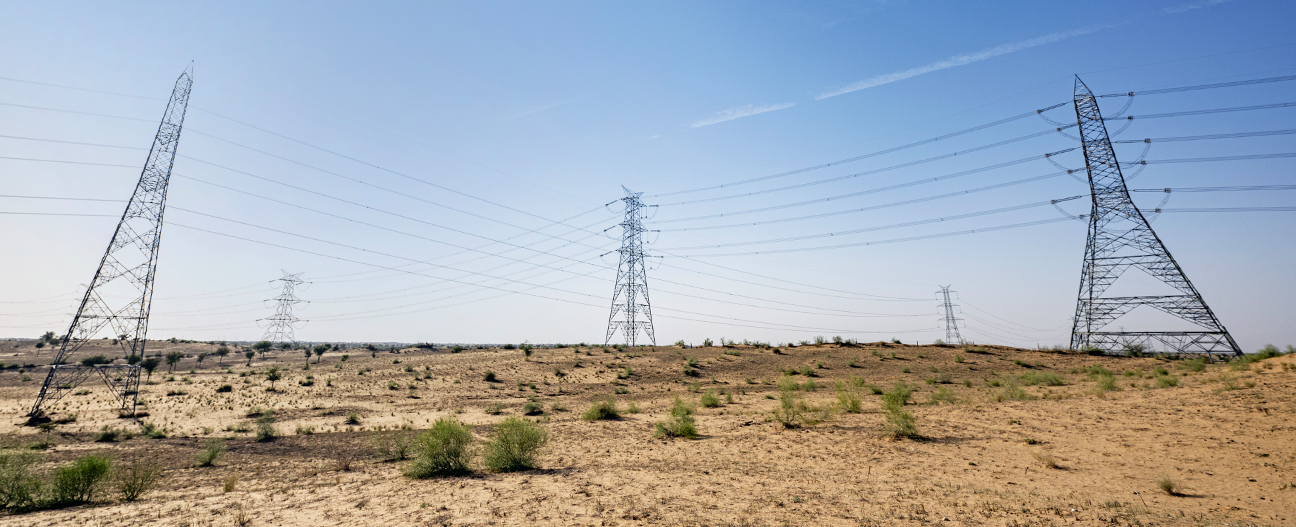
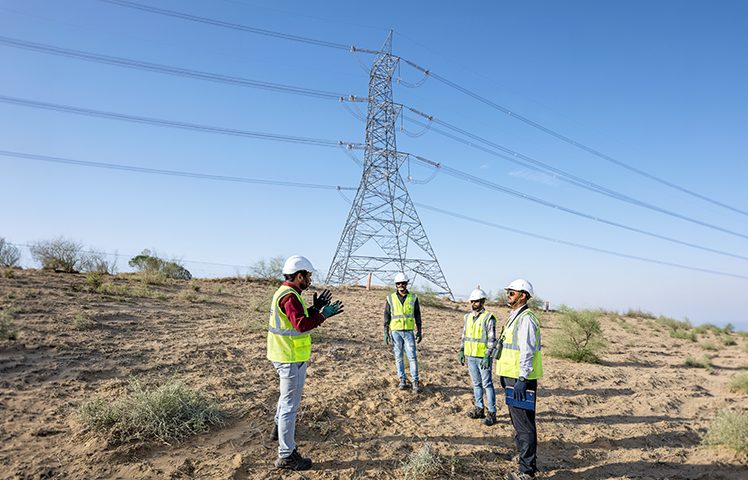
Transmission infrastructure and workers

Sustainability considerations form an integral part of the ERM process. Environmental, social, and governance (ESG) factors, along with emerging risks, are evaluated alongside operational and financial risks. This integrated approach enables effective navigation of a complex risk environment and reinforces strong governance, resilience, and preparedness in an evolving business landscape.

At Adani Energy Solutions, we are navigating a risk landscape that has grown more complex, more connected, and more consequential than ever before. As India’s energy demand grows by over 33% through 2030, the infrastructure that delivers power reliably, securely, and at scale has never mattered more. At Adani Energy Solutions, our commitment is to ensure that growth is never outpaced by risk.

Our expanding digital footprint across transmission, smart metering, and distribution networks has fundamentally changed the nature of risk we manage. Cybersecurity is no longer a technology concern alone; it is an enterprise risk priority. By strengthening our OT/IT security and embedding cyber resilience across every layer of our operations, we are institutionalising a risk management culture that protects our operations, safeguards our stakeholders, and strengthens the enterprise for the long term.

Shashank Sharma
Chief Risk Officer

Source: IEA

Risk Governance

Effective risk governance is essential to maintaining operational resilience and strategic continuity in a dynamic and highly regulated energy sector. Our risk management framework is embedded within the overall governance structure, enabling timely identification, assessment, and response to emerging risks. Oversight is exercised through a multi-tiered risk governance framework, where the Board of Directors defines the strategic direction and risk appetite, supported by the Risk Management Committee (RMC) and the Audit Committee in overseeing the implementation and ongoing monitoring of risk policies and controls.

The Chief Risk Officer (CRO), reporting directly to the CEO, leads the enterprise-wide risk identification and management process. At the operational level, the Management Risk Committee (MRC), Business Risk Team (BRT), and Functional Risk Committees (FRCs) work collaboratively to identify, assess, and mitigate risks within their respective domains. This integrated approach strengthens risk awareness across the organisation and supports resilience, regulatory compliance, and sustainable growth.

An independent third party periodically reviews our risk management framework, and the feedback is incorporated to further strengthen the system. Internal audits are conducted annually on a rotational basis across functions, ensuring coverage of all business verticals over a three-year cycle. The Risk Management Policy is reviewed each year and updated in line with changes in the business and operating environment.

Risk Governance Structure

Risk governance structure — Board of Directors, Risk Management Committee (RMC), Management Risk Committee (MRC), Business Risk Team (BRT) and Functional Risk Committees (FRCs) across BD, Engg., O&M, Safety, Sustainability, Projects, CTCG, IT/Technology, F&A, HR, Regulatory and CMG

Roles and Responsibilities

Board

  • Sets the tone for a transparent risk management culture
  • Reviews risk appetite and provide strategic direction

Audit Committee

Quarterly Review

  • Providing additional oversight on financial risks and internal controls

Business Risk Team (BRT)

Quarterly Review

  • Leads risk management across business units
  • Coordinates with FRCs for risk identification and management
  • Conducts peer-risk benchmarking and maps risk interactions
  • Reports significant risks to MRC

Risk Management Committee (RMC)

Quarterly Review

  • Assists the Board in managing significant risks
  • Framing, implementing, and monitoring the Company’s risk management plan
  • Evaluates and monitors risk management procedures and controls
  • Periodically reviews the effectiveness of the framework and ensures its alignment with evolving industry dynamics and regulatory requirements
  • Guides MRC in reviewing internal business functions

Management Risk Committee (MRC)

Quarterly Review

  • Ensures the efficacy of risk management procedures and controls
  • Assesses top risks through regular business function reviews
  • Guides BRT and FRC in mitigating prioritised risks
  • Communicates key risk implications to RMC

Functional Risk Committee (FRC)

Quarterly Review

  • Oversees risk management at the department level
  • Ranks risks based on severity and secures Function Head approval
  • Updates the Risk Register & Risk Plan
  • Presents function-level risk reports to MRC

Sustainability Risk Governance

The Company adopts a multi-source approach to evaluating sustainability-related risks. This includes internal operational data spanning 16 states, combined with external intelligence such as geospatial analysis, climate vulnerability modelling, and forward-looking regulatory assessments. Insights from stakeholder engagement and materiality assessments are incorporated to ensure that the risk evaluation reflects the expectations and concerns of communities, regulators, and investors.

Risks are assessed through a multidimensional lens covering physical, transition, reputational, operational, and financial dimensions, alongside their likelihood and impact. Quantitative indicators such as downtime thresholds and cost projections are combined with qualitative inputs including policy direction and stakeholder visibility. All risks are evaluated through a unified matrix that gives sustainability-related considerations equal weight alongside financial and operational factors.

Opportunities are assessed with similar rigour through feasibility studies, financial modelling, and stakeholder engagement, and are integrated into the enterprise risk management framework. Priority areas in FY 2025-26 included green transmission corridors, accelerated smart meter deployment, digital demand-side management platforms, and sustainability-linked financing such as green bonds and ESG credit lines. Cross-functional coordination ensures ESG considerations are embedded across project planning, investment decisions, M&A evaluations, and compliance processes, supporting resilient and purpose-driven growth.

Governance at Board Level

Sustainability risk oversight is anchored at the Board level through the Corporate Responsibility Committee (CRC) that comprises 100% Independent Directors. The Committee provides strategic direction on environmental, social, and governance matters and ensures that sustainability considerations are systematically integrated into long-term planning and operational decision-making. Its oversight covers the review of sustainability disclosures, assessment of performance against global benchmarks, and evaluation of ESG-related risks and opportunities. The CRC also monitors climate-related strategy, stakeholder engagement outcomes, and alignment with relevant national and international sustainability frameworks. Leveraging the Board’s experience in corporate governance, compliance, and stakeholder protection, the Committee ensures that sustainability risks are governed with clear accountability and embedded within the Company’s overall risk framework.

Integration of responsibilities across the sustainability governance structure

Oversight at Management Level

Execution of sustainability risk governance is led by the Designated Chief Sustainability Officer (CSO), who translates Board-level direction into coordinated action across the organisation. Supported by the ESG Head, the CSO oversees the integration of sustainability considerations into business processes, risk management, and operational decision making, while tracking performance against defined ESG objectives and regulatory requirements. Accountability for sustainability outcomes is reinforced through performance-linked mechanisms. Sustainability parameters form part of executive compensation structures, with 25% of Key Result Area (KRA) assessments aligned to ESG performance and the management of related risks.

A structured, multi-tiered management framework enables effective execution. Cross-functional working groups comprising functional leaders support the identification of material sustainability risks and opportunities, development of mitigation and transition actions, and integration of ESG considerations into departmental objectives. Designated ESG Champions at the site level act as single points of contact, supporting implementation, monitoring progress, and ensuring data integrity in line with validation and assurance protocols.

Structured reporting mechanisms ensure continuous oversight and alignment. Management provides periodic updates to Board-level committees, including the Corporate Responsibility Committee (CRC) and the ESG Apex Committee, through defined reporting and presentation cycles, covering performance, emerging risks, regulatory developments, and stakeholder insights. This ensures timely escalation and informed decision making.

Roles and responsibilities are formalised through clearly defined role descriptions, committee charters, and Board-approved sustainability and risk management policies. The framework is further strengthened through independent third-party reviews and annual internal audits conducted on a rotational basis across functions, ensuring comprehensive coverage over a three-year cycle. Policies are reviewed annually and updated to reflect changes in the business and operating environment.

Our Sustainability Governance Structure

Sustainability governance structure — CRC Committee of BoD, MD/CEO, ESG Mentors, CSO & Head-ESG, ESG Apex Committee, ESG Core Working Group and ESG Project Champions

Integration of Controls Across Functions

Adani Energy Solutions manages sustainability-related risks and opportunities through an Integrated Management System (IMS) that operates across leadership and operational levels. The system embeds ESG key performance indicators (KPIs) within departments to ensure accuracy and timely response.

These controls enable consistent monitoring and assurance of sustainability performance and are fully aligned with core internal functions, including finance, legal, operations, and compliance. This integrated approach ensures cross-functional visibility and accountability, embedding sustainability oversight into both strategic decision-making and routine management while strengthening execution discipline and organisational resilience.

Integrated Enterprise Risk Management Framework

Integrated Enterprise Risk Management Framework — Risk Identification, Risk Assessment, Risk Mitigation and Review & Monitoring stages (P1-P7) with Sharing and Learning

Our Integrated Risk Management (IRM) framework provides end-to-end oversight of internal and external risks, supported by structured mitigation controls. Led by the Chief Risk Officer, the framework enables timely risk identification, escalation, and response across the organisation. It is grounded in strong governance principles and supports both strategic and operational objectives through defined review and monitoring mechanisms.

IRM framework components

  • Risk identification: Structured tools such as risk registers, SWOT analysis, and scenario planning are used at both strategic and departmental levels. Function heads, senior leadership, and employees, supported by the strategy team, drive a bottom-up process to capture risks across the organisation.
  • Risk assessment: Risks are evaluated for likelihood and impact using a combination of qualitative and quantitative methods. Risk indicators are developed and regularly refined in collaboration with relevant departmental processes, supported by standardised data collection and validation led by site-level ESG Champions and structured reviews overseen by ESG Mentors and the Chief Sustainability Officer.
  • Risk mitigation: Mitigation strategies, including risk avoidance, reduction, transfer, and acceptance, are formulated through cost-benefit analysis based on the risk severity.
  • Monitoring and reporting: Tracks residual risk levels and key indicators, supported by periodic reporting

IRM significance

  • Holistic risk perspective: Identifies interlinkages between risks and their impact on business objectives
  • Early risk detection: Embeds risk management into operations to identify and address risks proactively
  • Informed decision-making: Improves visibility on risk exposure to support balanced strategic choices
  • Operational effectiveness: Enhances efficiency by streamlining processes and optimising resource deployment
  • Compliance and governance: Strengthens regulatory adherence through clear policies, procedures, and accountability

Approach to Risk Management

The risk management framework enables early identification and mitigation of risks through a structured hierarchy of controls. It is designed to surface emerging risks, assess interdependencies, and align risk considerations with business objectives, including during product and service development. Streamlined operational processes and optimised resource allocation support efficiency and regulatory compliance. Sustainability is embedded across the framework, with ESG-linked metrics integrated into performance reviews of executives, ESG mentors, and champions.

Monitoring and Review

Governance is reinforced through regular reviews by the Management Risk Committee (MRC), with oversight from the Risk Management Committee (RMC) and the Board of Directors. The Business Risk Team (BRT) and Functional Risk Committees (FRCs) coordinate risk identification, benchmarking, and reporting across business units. Written updates are submitted to the MRC on a monthly basis. Key risk matters are reviewed from a strategic perspective, with meeting outcomes formally reported to the Board.

Assurance of Risk Controls

The framework incorporates periodic internal audits conducted by the Management Audit and Assurance Services (MAAS) team, which reports directly to the Chairman’s office, ensuring independent validation of risk controls. In addition, the Company engages an external third party to review the risk management framework and integrates their recommendations to strengthen processes. Internal audits are conducted annually on a rotational basis across functions to maintain consistent assurance coverage.

Building Risk Culture

Building a risk-aware culture

Developing Skills and Competencies in Executive Leadership, Operational Team, HoDs, BRT, and FRT

Executive leadership, operational teams, Heads of Departments, the Business Risk Team (BRT), and Functional Risk Teams (FRTs) undergo regular risk management training to strengthen enterprise-wide risk awareness and decision-making. Non-executive directors, drawing on extensive industry experience, remain closely engaged through quarterly briefings on strategic, tactical, operational, and emerging risks, supported by the Board familiarisation programme.

Developing Skills and Competencies in Corporate Responsibility Committee

The Company assesses and develops Corporate Responsibility Committee (CRC) competencies through a structured skill matrix to strengthen sustainability oversight. Internal evaluations, including anonymous member feedback, help identify capability gaps critical to committee effectiveness. Targeted training is then provided on climate-related financial disclosures, evolving regulations, and emerging ESG risks. The CRC also engages with internal and external ESG experts to deepen technical understanding and support informed decision-making. This assessment is conducted biannually.

Developing Skills and Competencies in Employees

All employees receive structured training on the Company’s internal risk framework and risk management system, aligned with ISO 31000. Practical case examples from across functions reinforce how risk principles are embedded into daily operations, supporting consistent application at the operational level.

Risk Heat Map

Risk heat map plotting probability against impact for key risks including Right-of-Way, Cyber attack, Change in economic policies, Geopolitical world order impairment, Negative social media, Global commodity price fluctuations and Adverse weather

Risk Prioritisation

A risk matrix score is calculated by combining the impact and likelihood of a risk event, enabling risks to be classified from very low to very high.

RatingRisk Matrix Score
Very Low Risk - (VLR)1-5
Low Risk - (LR)6-10
Medium Risk - (MR)11-15
High Risk - (HR)16-20
Very High Risk - (VHR)>20

Our Top Risks

RiskTrendRatingResponsibilityAppetite
R1Macroeconomic RiskIncreaseHigh riskFinanceHigh appetite
R2Cybersecurity RiskDecreaseMedium riskITMedium appetite
R3Reputation RiskDecreaseMedium riskCorporate CommunicationsHigh appetite
R4Right of Way (RoW) RiskIncreaseMedium riskProjectsMedium appetite
R5Climate RiskDecreaseLow riskO&MMedium appetite
R6Obsolescence of Technology Leading to Non-availability of Spares and ServiceNeutralMedium riskO&MMedium appetite
R7Biodiversity RiskNeutralLow riskESG/O&MMedium appetite
R8Failure of Climate Change AdaptationNeutralLow riskO&M/ProjectsMedium appetite
Risk Trends:
Increase Decrease Neutral
Risk Rating:
High risk Medium risk Low risk
Appetite:
High Medium Low

Key Risks and Mitigation Actions

Capitals

Financial Capital
Manufactured Capital
Intellectual Capital
Human Capital
Social and Relationship Capital
Natural Capital

Material Topics

M1 Biodiversity and Habitat Management
M2 GHG Emissions & Climate Change
M3 End Use Efficiency and Demand
M4 Water and Effluent Management
M5 Occupational Health & Safety
M6 Customer Relationship Management
M7 Employee Engagement
M8 Diversity, Equity and Inclusion
M9 Energy Access & Affordability
M10 Human Capital Development
M11 Community Relations
M12 Business Ethics and Transparency
M13 Supply Chain Management
M14 Economic Performance
M15 Public Policy & Advocacy
M16 Grid Resiliency
M17 Digitisation, Data Privacy & Information Security
M18 Product Quality & Safety
M19 Labour Practices & Human Rights
M20 Waste Management

Strategic Priorities

S1 Safety culture
S2 ESG integration
S3 Efficient capital allocation and execution strategy
S4 Portfolio of efficient operating assets (Transmission| Distribution| Smart Metering)
S5 Robust financial profile
S6 Business excellence
S7 Digitalisation and innovation
S8 Capacity & capability building
R1Macroeconomic Risk

Impact

  • Changes in economic conditions and monetary policy, including interest rate movements and evolving financial and lending policies of Indian banks and institutions, can affect funding availability and investment decisions.
  • Rising interest rates and constrained access to international or low-cost funding sources may increase financing costs and impact capital deployment.

Mitigation

  • Hedge exposure to interest rate volatility and diversify funding sources to manage financing costs
  • Strengthen investor and banker engagement through a robust, CTU-backed business model and active participation in industry and policy forums

Opportunities

  • Deeper relationships with investors and financial institutions through improved risk transparency
  • Potential improvement in financing terms and funding conditions
R2Cybersecurity Risk

Impact

  • Cyber-attacks targeting power sector assets such as transformers, circuit breakers, SCADA systems, PLCs, and relays can disrupt operations, reduce availability, increase equipment replacement costs, and result in loss of incentives and revenue

Mitigation

  • Conduct regular Vulnerability Assessment and Penetration Testing (VAPT) across critical assets
  • Implement a structured cybersecurity management framework with defined response protocols
  • Monitor, analyse, and report global cyber-attack trends to strengthen preparedness

Opportunities

  • Develop platforms for threat intelligence sharing and dissemination of best practices
  • Strengthen cybersecurity capabilities across power sector operations
  • Create opportunities to monetise proven cybersecurity platforms by offering them to industry peers
R3Reputation Risk

Impact

  • Adverse social media campaigns, misinformation, or disinformation related to portfolio companies can affect stakeholder perception, delay capital funding, and impact project execution timelines, resulting in deferred revenues linked to capital expenditure

Mitigation

  • Address misinformation through targeted communication and structured media response mechanisms
  • Strengthen goodwill through proactive community engagement and enhanced consumer focus enabled by technology
  • Appoint an official spokesperson and enforce corporate and social media communication policies to ensure accuracy and consistency

Opportunities

  • Build trust through transparent, regular disclosures and stakeholder updates
  • Strengthen reputation by sharing verified success stories, case studies, and positive social and economic impact
  • Leverage community engagement and fact-based communication to counter misinformation and reinforce credibility
R4Right of Way (RoW) Risk

Impact

  • Right-of-Way (RoW) clearance challenges, compensation disputes, and related litigation can delay transmission line construction, affecting project timelines, asset financial performance, and resulting in liquidated damages due to schedule overruns

Mitigation

  • Engage in policy advocacy to enable pre-defined transmission corridors
  • Adopt innovative transmission line design and installation methodologies to reduce dependency on land acquisition and approvals

Opportunities

  • Deployment of innovative designs optimises transmission infrastructure planning and execution
  • Reduced tower count lowers land usage, project costs, and execution timelines
  • Improved efficiency strengthens overall project delivery and asset performance
R5Climate Risk

Impact

  • Adverse climate conditions and extreme natural or societal events, including floods, cyclones, droughts, bushfires, pandemics, and similar disruptions, can affect asset health and operations, leading to project delays, higher O&M costs, loss of availability-linked incentives, and pressure on margins and future financial performance

Mitigation

  • Design and upgrade assets to withstand adverse climate conditions and reduce system losses
  • Implement asset-specific disaster management plans, supported by crisis-response partnerships and a disaster management kitty (self-insurance)
  • Monitor weather patterns and assess asset-level impacts on an ongoing basis
  • Integrate environmental considerations through EIAs, policy advocacy, and participation in industry forums
  • Support R&D in sustainable technologies, promote energy-efficient consumption, and strengthen climate adaptation measures
  • Implement reforestation, afforestation, and biodiversity conservation initiatives

Opportunities

  • Strengthen environmental stewardship through reforestation, emission reduction, and biodiversity programmes
  • Enhance long-term asset resilience and sustainability performance
  • Build stronger community relationships through climate and environmental initiatives
R6Obsolescence of Technology Leading to Non-availability of Spares and Service

Impact

  • Rising technology and obsolescence risks in OT systems across power transmission and distribution can disrupt operations, reduce asset availability, and impact financial performance, including pressure on EBITDA margins.

Mitigation

  • Regular monitoring of technology developments and obsolescence risks across critical equipment
  • Structuring contractual arrangements to secure long-term OEM and service support
  • Development of reverse engineering and 3D printing capabilities to manage spare part availability

Opportunities

  • Strategic partnerships with technology providers and research institutions to access advanced solutions and expertise
  • Support for indigenisation, innovation, and effective obsolescence management
  • Potential opportunities for commercialisation of in-house capabilities and solutions
R7Biodiversity Risk

Impact

  • CAPEX execution and O&M activities face risks related to Right-of-Way (RoW) acquisition and maintenance, particularly in eco-sensitive and biodiversity-rich areas. These challenges can lead to project delays, reduced asset availability during operations, lower EBITDA margins, and loss of incentives

Mitigation

  • Commit to a ‘No Biodiversity Loss’ and ‘No Deforestation’ approach across operations
  • Apply a COSO-based risk framework to manage strategic and operational environmental risks
  • Integrate environmental impact considerations into project planning and execution

Opportunities

  • Collaborate with environmental organisations to support biodiversity conservation
  • Strengthen reputation and access sustainability-linked business opportunities
  • Attract customers seeking reliable green power and environmentally responsible solutions
R8Failure of Climate Change Adaptation

Impact

  • Extreme weather events linked to climate change can damage infrastructure assets across geographies, leading to outages, customer dissatisfaction, and pressure on profitability

Mitigation

  • Conduct scenario analysis to assess climate-related risks and opportunities
  • Deploy Emergency Restoration Systems (ERS) to enable rapid service recovery
  • Invest in resilient infrastructure, innovation, and technology upgrades
  • Modernise transmission and distribution networks to strengthen system resilience

Opportunities

  • Access green financing and investment through climate-resilient initiatives
  • Strengthen reputation and support compliance with environmental regulations
Managing the risk of failure of climate change adaptation

Sustainability and Climate-related Risks and Opportunities

We identify and assess sustainability and climate-related risks and opportunities and integrate them into our Enterprise Risk Management framework aligned with COSO, as well as our HSE Management System. The TCFD/IFRS S2 framework guides the evaluation of climate risks and informs the identification of related opportunities.

Scenario Analysis and Stress Testing

Our climate risk assessment draws on selected IPCC RCP/SSP pathways and IEA scenarios, informing the Company’s climate strategy, risk preparedness, and long-term business outlook.

Climate-related ScenarioTemperature AlignmentAdaptation Strategy
RCP 4.5 / SSP 2-4.5 (Medium Emission)Intermediate emissions scenario with global mean temperature expected to rise by 1.1-2.6°C
  • Strengthen asset and infrastructure resilience
  • Address risks from rising temperatures, precipitation changes, and extreme weather
RCP 6.0 (High Emission)High emissions scenario with global mean temperature expected to rise by 3-4°C
  • Implement water management, recycling, and alternative cooling technologies
  • Collaborate with policymakers for supportive regulations
  • Train staff for climate resilience
  • Engage stakeholders to address climate concerns
  • Strengthen disaster management and conduct regular mock drills
IEA 2DS / SSP 1-2.6The 2DS is consistent with a 50% probability of limiting the expected global average temperature increase to 2°C by 2100
  • Divesting Dahanu Thermal Power Station from the portfolio
  • Committed to no new thermal power assets
IEA B2DSGlobal mean temperature expected to rise beyond 2°C Scenario (B2DS)
  • Expanding renewable energy share in the power mix
IEA NZE 2050 / SSP 1-1.9The IEA Net Zero Emissions by 2050 (NZE)

Key Risks and Mitigations

Type of Risk / OpportunitySpecific ExposureLikelihood of OccurrenceTime HorizonImpact on ProspectsTransition & Adaptation Strategy
Physical Risk
1. Acute
2. Chronic
  • Extreme weather events (cyclones, floods, heatwaves)
  • Long-term climate disruptions, rising temperatures
More likely than not
  • Short: 1-3 yrs
  • Medium: 3–6 yrs
  • Infrastructure damage
  • Service disruptions
  • Higher operations and maintenance (O&M) costs
  • Employee safety risks
  • Revenue loss
  • Reduced investor confidence
  • Additional capital requirements
  • Climate vulnerability mapping
  • Asset hardening measures
  • Emergency response protocols
  • Predictive maintenance practices
  • Infrastructure investments in high-risk zones
  • Stakeholder engagement to build trust
  • Increased renewable energy (RE) generation
  • Deployment of low-carbon technologies
Transition Risk
1. Policy and Legal
  • Carbon pricing and evolving emission regulations
More likely than not Medium: 3–6 yrs
  • Trade regimes and tariff caps may pressure financial performance, necessitating higher environmental and legal provisions.
  • Ensure compliance with evolving regulations and carbon emission standards
  • Enhance energy efficiency to reduce emissions and operating costs
  • Lower GHG intensity through higher renewable integration and improved grid resilience
  • Maintain transparent stakeholder communication to strengthen sustainability support
  • Engage in policy advocacy for favourable trade and tariff structures
  • Invest in low-carbon technologies and carbon offset programmes
  • Evaluate carbon capture and storage options to mitigate potential tax impacts
2. Market
  • Investor and financial institution preference for low-carbon assets may constrain access to capital for Adani Energy Solutions and its partners.
More likely than not Medium: 3–6 yrs
  • Rising demand for renewable energy (RE)–based transmission and low-carbon technologies may disrupt fossil-based services
  • Market shifts may test the Company’s transition strategy
  • Financial impacts may include higher cost of capital, limited funding access, reduced investor confidence, disrupted partnerships, and increased compliance costs
  • Expand renewable integration within distribution networks and enter emerging markets
  • Offer renewable energy solutions for commercial and industrial customers
  • Commission electric vehicle (EV) charging infrastructure
  • Set carbon reduction targets, increase investments in renewable energy, and embed sustainability into the core business strategy
  • Explore green bonds, impact investing, and public–private partnerships as alternative financing avenues.
  • Maintain transparent and consistent investor communication to sustain confidence and attract long-term capital
  • Invest in research and development to enable sustainable innovation and new business models
  • Engage stakeholders to share resources, knowledge, and best practices
3. Technology
  • Inability to adopt emerging technologies may increase costs, reduce competitiveness, and accelerate the risk of obsolescence
More likely than not Medium: 3–6 yrs
  • Higher operating costs and inefficiencies, weakening competitive position
  • Loss of customers, revenue, and investor confidence
  • Elevated risk of asset and technology obsolescence, affecting long-term sustainability
  • Upgrade networks using advanced technologies such as High-Temperature Low-Sag (HTLS) conductors
  • Integrate resilient technologies across project design, execution, and commissioning stages
  • Foster innovation through targeted training programmes and strategic partnerships
  • Align technology initiatives with evolving customer needs to maintain market relevance.
Operational Risk
  • Vulnerability of legacy transmission assets
About as likely as not Medium: 3–6 yrs
  • Reduced operational efficiency
  • Increased downtime
  • Risk of stranded assets
  • Modernise transmission infrastructure through digital substations and automation, supported by predictive analytics
Reputational Risk
  • ESG ratings and stakeholder expectations
About as likely as not
  • Short: 1–3 yrs
  • Medium: 3–6 yrs
  • Increased pressure on transparency and disclosures
  • Reduced investor confidence
  • Constraints on access to capital
  • Strengthen ESG disclosures and reporting quality
  • Obtain third-party assurance to enhance credibility
  • Align disclosures with CDP and TCFD frameworks
  • Embed ESG metrics into leadership performance reviews
Environmental Risk
  • Water scarcity and biodiversity loss
About as likely as not
  • Short: 1–3 yrs
  • Medium: 3–6 yrs
  • Long: 6+ yrs
  • Operational constraints
  • Ecosystem disruption
  • Increased regulatory scrutiny
  • Implement a No-Net-Loss biodiversity policy
  • Align practices with IBBI guidelines
  • Strengthen water stewardship programmes
  • Conduct ecological impact assessments
Strategic Risk
  • Climate induced supply chain disruptions
More likely than not
  • Short: 1–3 yrs
  • Medium: 3–6 yrs
  • Delays in equipment delivery
  • Cost inflation
  • Reliability concerns
  • Diversify supplier base
  • Increase local sourcing
  • Implement a climate-resilient procurement strategy
  • Maintain contingency inventory buffers

Key Opportunities

Opportunity TypeDescriptionLikelihood of OccurrenceTime HorizonImpactRealisation Strategy
Strategic
  • Smart metering and digital grid expansion
Virtually certain
  • Short: 1–3 yrs
  • Medium: 3–6 yrs
  • Efficiency gains
  • Reduced losses
  • Improved customer experience
  • Deploy smart meters and digital platforms
  • Use real-time analytics for demand-side management
  • Enable greater consumer participation and empowerment
Strategic
  • Green transmission corridors
Very likely Medium: 3–6 yrs
  • Enhanced renewable energy integration
  • Alignment with climate objectives
  • Improved access to green finance
  • Invest in infrastructure that enables efficient evacuation of renewable energy
  • Align transmission expansion with national climate targets
Financial
  • Access to sustainability-linked financing
Very likely
  • Short: 1–3 yrs
  • Medium: 3–6 yrs
  • Lower cost of capital
  • Stronger ESG positioning
  • Expanded funding options
  • Integrate ESG metrics into treasury operations
  • Raise funds through green bonds and ESG-linked credit lines
  • Strengthen sustainability performance to improve scores across ESG ratings such as Sustainalytics, FTSE, and DJSI

Read more in the Environment section on Pg. 154

Read further
Climate Transition Plan Report

Key opportunities for Adani Energy Solutions

Emerging Risks

The Company conducts an annual Board-level review of emerging risks during strategy and risk discussions. Inputs are drawn from global and sectoral trends and internal assessments led by the Chief Risk Officer. The process focuses on risks that may not yet be material but could influence operations, financial resilience, or strategic priorities over the medium to long term.

Adani Energy Solutions identified five emerging risks: capacity and capability building, geopolitical tensions, technology disruption, foreign exchange volatility, and climate change. Each risk is monitored through structured oversight and managed through targeted mitigation measures.

Emerging RiskDescriptionImpactMitigating Actions
Capacity and Capability Building
  • Rapid expansion across transmission, distribution, and smart metering increases demand for a skilled, future-ready workforce
  • Shortages in technical roles such as erection, stringing, and foundation work, along with leadership gaps, can affect execution
  • Adoption of advanced technologies and ESG requirements heightens the need for continuous upskilling
  • Delays in project commissioning and reduced operational efficiency
  • Higher execution overheads due to increased deployment of supervisors and managers amid talent shortages
  • Elevated risks to safety, quality, and regulatory compliance
  • Structured training programmes, including KRONOS for real-time workforce tracking and career progression
  • Saksham programme for contractor induction and safety sensitisation
  • Succession planning and competency mapping for critical roles
  • Technical Centres of Excellence and zonal accountability models
  • Comprehensive training initiatives to bridge skill gaps in the transmission line workforce
Geopolitical Tensions
  • Global trade disruptions, tariff disputes, and political instability in supplier regions can affect material availability and pricing
  • Dependence on imported components and technologies for HVDC projects increases exposure to cross-border regulatory changes
  • Supply chain delays and cost escalation
  • Higher risk of non-compliance with evolving trade regulations
  • Increased volatility in procurement planning and vendor relationships
  • Supplier risk assessments covering geography, financial strength, and ESG compliance
  • Diversified sourcing strategies and localisation of critical components
  • Active participation in policy advocacy and industry forums
  • Strengthened vendor onboarding and ESG screening processes
Adverse Outcomes of Frontier Technologies
  • Rapid advances in grid systems, AI, IoT, and smart infrastructure may outpace existing technologies
  • Ongoing digitalisation and automation demand continuous technology adoption and seamless integration
  • Operational inefficiencies and higher maintenance costs
  • Loss of competitiveness and customer dissatisfaction
  • Increased exposure to cybersecurity and data integrity risks
  • Investments in smart grid upgrades, drone-based inspections, and IoT-enabled monitoring
  • Deployment of AI-driven analytics and digital twin solutions
  • Internal innovation platforms such as MISA and SafeX
  • Strategic partnerships with technology providers and research institutions