

Collaborating for Lasting Impact
Adani Energy Solutions, in partnership with the Adani Foundation, collaborates with communities to drive inclusive development through innovative programmes. Our initiatives place strong emphasis on empowering women by promoting self-reliance, entrepreneurship, and financial independence, while improving livelihoods and enhancing the well-being of the communities we serve.
Key Linkages
Material Topics
Key Risks
Strategic Priorities
Capitals
 Social & Relationship Capital
SDGs
CSR Philosophy of the Adani Group of Entities
At the heart of the Adani Group’s approach to CSR lies Seva, the ethos of selfless service. Seva is the guiding emotion that shapes our social interventions and reflects our deep commitment to nation-building, sustainability, and community empowerment, aligned with the Group’s overarching philosophy of ‘Growth with Goodness’. It is about laying the foundation for a future defined by inclusion, equity, dignity and opportunities. Our CSR efforts extend beyond addressing immediate needs to creating pathways for multifaceted growth and development, ensuring that individuals and communities are equipped to drive their own futures.
A primary feature of the Group’s CSR strategy is its focus on sustainable empowerment. With this belief, the Adani Foundation designs programmes with a long-term perspective, ensuring sustainable and long-term empowerment of community.
A primary feature of the Group’s CSR strategy is its focus on sustainable empowerment.

Core Tenets Guiding Our CSR Approach
 Leave No One BehindEnabling Dreams and AspirationsSustainable and Long-Term Empowerment
About The Adani Foundation – Seva Since 1996
We implement our CSR initiatives through the Adani Foundation, the social welfare and development arm of the Adani Group, established in 1996. For nearly three decades, the Foundation has served as a catalyst for inclusive and sustainable development, translating the Adani Group’s purpose and philosophy into meaningful, on-ground action across India. It continues to walk alongside communities – listening, learning, and partnering to create pathways for opportunity, resilience, and shared progress.
The Foundation works across geographies with a life-cycle approach and inclusive framework to enable change where it matters the most. Currently, it is operating in 7,247 villages across 22 states, positively impacting 13.3 million lives. Its interventions span critical development areas, including education, health and nutrition, sustainable livelihoods, climate action, and community development, with a strong focus on children, women, youth, and marginalised populations. The strategies of the Foundation are aligned with national priorities and Sustainable Development Goals (SDGs), ensuring that its initiatives contribute to nation-building and holistic development.
⊕ Read more about the Adani Foundation here https://www.adanifoundation.org/
Vision
To accomplish a passionate commitment to social obligations towards communities, fostering sustainable and integrated development, thus improving quality of life.
Mission
To play the role of a facilitator for the benefit of the people without distinction of caste or community, sector, religion, class or creed, in the fields of education, community health, and promotion of social and economic welfare and upliftment of the people in general.
Expanding Our Community Impact
CSR Target
Health outreach 20 Lakh
Education 1,250+ Adani & Utthan schools; 2.06 Lakh students; 2.00 Lakh students through other education programmes
Sustainable Livelihoods: 1.22 Lakh women; 40,000 farmers; 12,000+ youths
Climate Action: 73+ crore liters additional water storage capacity; 2.00 Lakh plantation
Community Development: 55 Adani Samrudhh Gram
Our CSR Impact
Total CSR spend (₹ crore)
15%
Increase in CSR spending as compared to the previous year
Total lives touched (million)
90%
Increase in lives touched as compared to the previous year
Strategic Approach to Promoting Self-Reliance and Lasting Empowerment
The Adani Foundation’s CSR approach is closely aligned with the Sustainable Development Goals (SDGs), addressing national priorities such as poverty reduction, livelihoods, human rights, and indigenous rights. Its bottom-up, community-driven model operates through Village Development Forums, ensuring participation from local leaders, civil society, experts, and marginalised groups, and is supported by an integrated grievance redressal system.
The Foundation prioritises inclusiveness, focusing on vulnerable communities including fisherfolk, tribal groups, and women. Flagship initiatives like SuPoshan enhance women’s nutrition, social status, and incomes through dairy livelihood cooperatives and self-help groups. Environmental sustainability is ensured through green cover restoration, water conservation projects such as pond deepening and rainwater harvesting, and localised groundwater mitigation efforts across Mundra, Tiroda, and Godda.
Biodiversity conservation is another focus area, with initiatives designed around the protection of coastal and terrestrial ecosystems across industrial sites. The Foundation also demonstrated empathy during crises, such as floods, cyclones, and the COVID-19 pandemic, through relief efforts and volunteer engagement. Collaboration with government bodies and civil society organisations strengthens programmes such as Utthan and Swabhiman. Across all initiatives, our priority remains on generating meaningful impact and enhancing the overall well-being of communities.
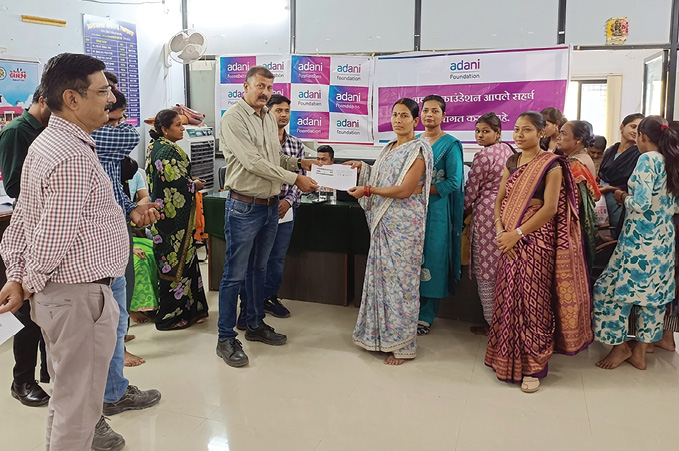
Target Communities
The target communities consist of populations living in areas around Adani Energy Solutions' facilities. Project areas across several locations – Mumbai, Nagpur and sub stations. The primary target groups are school-going children, livestock-dependent households, women, and youth who face persistent challenges such as lack of quality education facility, limited livelihood opportunities, and restricted access to healthcare and basic infrastructure.
Strategy to Strengthen Community Relationships and Social Licence to Operate
The entity follows a participatory, community-centric model in villages and Mumbai suburb, building trust through regular village consultations, need assessments, and partnerships with local self-governance bodies, district administration, and community organisations. A consistent on-ground presence, transparent communication, and grievance mechanisms strengthen inclusion and accountability. Development initiatives to strengthen the state of primary education, public health, water security, and livelihoods are designed around local priorities, ensuring community ownership and reinforcing the entity’s role as a long-term development partner while striving to enhance transparency, build mutual trust, and strengthen community connect.
Creating Systematic Impact and Expanding Grassroots Opportunities
The entity promotes inclusive community development through trust-building activities. Skill development programmes equip youth and women for employment and entrepreneurship and unlock new avenues across various service sectors. The women empowerment programme not only seeks to strengthen the self-help groups and producer groups by imparting training on technical & financial aspects and facilitating access to credit but also enables enterprise development by fostering backward & forward linkages through both offline and online platforms. Adani Energy Solutions’ Education initiatives focus on upgrading school infrastructure and creating enabling environment to build long-term human capital and aspirations.
Community Risk Management
Key community risks in areas of operation of Adani Energy Solutions Ltd. include degrading quality of education, water scarcity, climate-driven livelihood vulnerability, low levels of skills among youth, and environmental concerns. These risks are integrated into the Enterprise Risk Assessment Process through regular social risk assessments, stakeholder feedback, and site-level risk registers and are categorised by severity, likelihood, and their impact on community and business operations for a comprehensive oversight.
Mitigation Approach, Monitoring and Review Mechanism
All these risks exacerbate the vulnerability of the local population which Adani Energy Solutions’ initiatives seek to address through targeted interventions in Education, Health & Nutrition, Livelihoods, Climate Action, and basic Infrastructure Development. Healthcare and nutrition challenges are addressed through intervention woven around provisioning doorstep primary healthcare services. Livelihood vulnerabilities are mitigated by promoting income diversification, skill development, and enterprise support. Environmental risks are managed through green belt development, continuous monitoring, and compliance with statutory norms. Water and climate risks are mitigated through rainwater harvesting, augmenting water conservation capacity, and promoting efficient water-use practices. All interventions are monitored through defined indicators, field reviews, beneficiary feedback, audits, impact assessments, and third-party evaluations, ensuring adaptive and responsive management.
Investments in Risk Management and Mitigation
Sustained investments are made in education, healthcare infrastructure and access to primary healthcare, water security, livelihood diversification & skill enhancement, environmental safeguards, and community capacity-building initiatives to enhance community resilience and ensure long-term risk mitigation.
CSR Spend and Impact as per Focus Areas
| CSR Thematic Areas | Core Objective | Lives Impacted | CSR Spend (₹ crore) | Contribution to UNSDGs |
|---|---|---|---|---|
 Education Education |
|
|
32.16 | |
 Community Infrastructure Community Infrastructure |
|
|
5.25 |   |
 Community Health Community Health |
|
|
3.17 |  |
 Sustainable Livelihoods Sustainable Livelihoods |
|
|
1.09 | |
 Climate Change Climate Change |
|
|
8.53 |    |
CSR Governance and Accountability
Our CSR policy forms the foundation of our community development efforts. This policy provides a structured framework to plan, execute, and monitor social responsibility initiatives in line with regulatory requirements. Guided by this policy, our CSR strategy focuses on addressing the real needs and priorities of local communities.
Corporate Social Responsibility (CSR) Governance & Policy Disclosure
1) CSR Policy – Access Link & Focal Points
The Company has adopted a Corporate Social Responsibility (CSR) Policy in accordance with the requirements of the Companies Act 2013 and the applicable rules thereunder.
The CSR Policy, inter alia, covers the following key elements:
- Vision and strategic intent: Commitment to inclusive and sustainable development, aligned with national priorities and the Company’s broader sustainability objectives.
- Scope and thematic focus: CSR activities are undertaken in areas aligned with Schedule VII of the Companies Act, 2013, with focus on community development priorities.
- Implementation approach: Projects are implemented either directly or through eligible implementing agencies, in compliance with statutory requirements.
- Annual Action Plan (AAP): Clearly defined mechanism for identification, design, approval, and execution of CSR programmes including budgets, timelines, and measurable outputs/outcomes.
- Governance framework: Roles and responsibilities of the CSR Committee, Board, and management for effective oversight and execution.
- Monitoring, evaluation, and reporting: Structured monitoring systems, periodic review mechanisms, and maintenance of documentation/evidence for accountability and transparency.
- Risk management and compliance: Due diligence of implementing partners, fund utilisation tracking, and safeguards to ensure compliance with applicable regulations.
- Impact assessment: Provision for undertaking third-party impact assessment for eligible CSR projects, as per regulatory thresholds.
- Surplus treatment: Any surplus arising from CSR activities is treated in accordance with CSR Rules.
- Review and amendment: Periodic review of the policy to ensure alignment with evolving regulatory and business requirements.
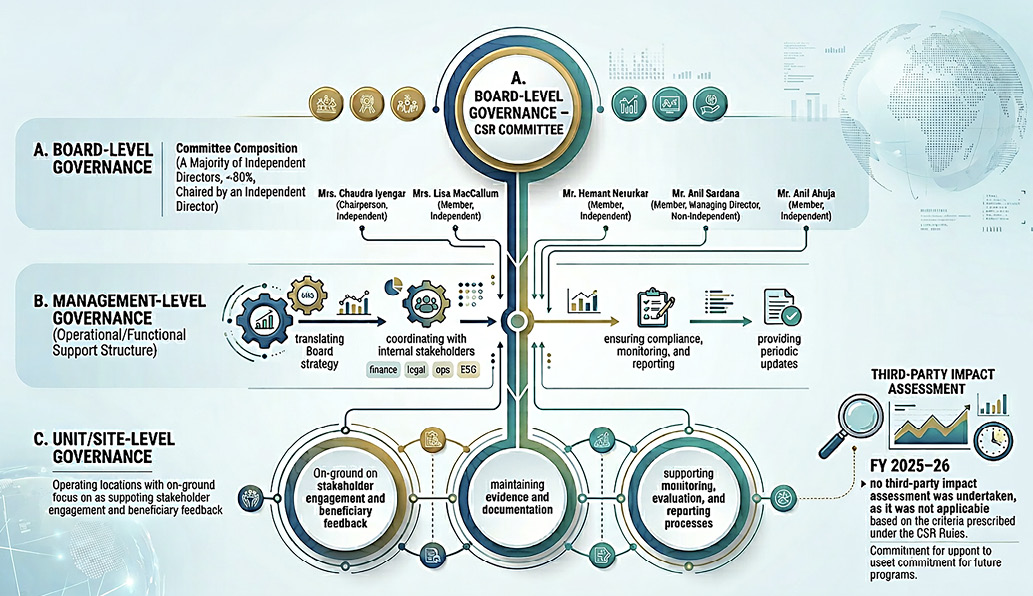
2) CSR Governance Framework
The Company has a multi-tier CSR governance structure to ensure effective oversight, execution, and monitoring of CSR initiatives.
A. Board-Level Governance – CSR Committee
The Company has constituted a Corporate Social Responsibility Committee of the Board comprising:
| Name of Director | Composition of Committee |
|---|---|
| Mrs Chandra Iyengar | Chairperson (Independent) |
| Mrs Lisa MacCallum | Member (Independent) |
| Mr Hemant Nerurkar | Member (Independent) |
| Mr Anil Sardana | Member (Managing Director, Non-Independent) |
| Mr Anil Ahuja | Member (Independent) |
The Committee comprises a majority of Independent Directors (~80%) and is chaired by an Independent Director, ensuring strong governance and independent oversight.
CSR Governance Snapshot
CSR Committee
5 members (majority Independent; chaired by Independent Director)
Governance Levels
Board → Management → Site
Policy Link
Publicly available on company website
Impact Assessment FY 2025-26
Not applicable
B. Management-Level Governance
At the management level, the Corporate Social Responsibility Committee (functional/operational support structure) drives implementation by:
- Translating Board-approved strategy into actionable programmes
- Coordinating with internal stakeholders (finance, legal, operations, ESG teams)
- Ensuring compliance, monitoring, and reporting
- Providing periodic updates to the CSR Committee
C. Unit/Site-Level Governance
At operating locations:
- Site/Unit-level CSR focal points oversee on-ground implementation
- Facilitate stakeholder engagement and beneficiary feedback
- Maintain evidence and documentation for audit trails
- Support monitoring, evaluation, and reporting processes
3) Roles & Responsibilities Across Levels
A. CSR Committee (Board Level)
- Strategic guidance & oversight: Define CSR priorities and ensure alignment with statutory requirements and sustainability strategy
- Approval of Annual Action Plan: Approve project portfolio, budgets, implementation modalities, and expected outcomes
- Resource allocation: Recommend and oversee utilisation of CSR funds
- Monitoring & review: Periodically review programme implementation and utilisation status
- Internal governance: Review risks, compliance adherence, and programme effectiveness
- Reporting: Provide updates to the Board and ensure adequate disclosures in statutory filings
B. Management-Level (Corporate CSR Function)
- Planning & programme design: Prepare Annual Action Plan with defined KPIs and measurable outcomes
- Implementing partner due diligence: Assess eligibility and capability of implementing agencies
- Programme management: Oversee execution, timelines, and coordination across stakeholders
- Monitoring & MIS: Maintain dashboards, fund tracking, and performance monitoring systems
- Quality assurance: Conduct internal reviews and ensure adherence to approved frameworks
- Compliance & reporting: Support statutory disclosures and assurance processes
C. Unit / Site-Level
- Local implementation oversight: Monitor programme execution at site level
- Stakeholder engagement: Interface with local communities and beneficiaries
- Documentation: Maintain supporting evidence and records
- Risk identification: Flag operational or community-level risks/issues
- Support evaluation: Facilitate third-party assessments and field verification
4) Third-Party Impact Assessment Frequency / Approach
The Company undertakes third-party impact assessments in accordance with applicable provisions of the Companies Act 2013 and CSR Rules.
Impact assessment is conducted for eligible CSR projects based on regulatory thresholds and materiality considerations.
During the financial year FY 2025–26, no third-party impact assessment was undertaken, as it was not applicable based on the criteria prescribed under the CSR Rules.
The Company remains committed to undertaking impact assessments for CSR programmes where applicable, to:
- Evaluate programme effectiveness and outcomes
- Strengthening accountability and transparency
- Incorporate learnings into future CSR planning
⊕ Access link for latest impact assessment report for public viewing
Assessing Impact of Operations on Communities
- Once the programme reaches three years of maturity, a third-party agency is engaged to conduct an impact assessment.
| Location of Impact | Impact Description | Impact Management Strategy |
|---|---|---|
| Mumbai Suburbs | In Mumbai, the Adani Foundation and Adani Electricity have partnered with the BMC Education Department and brought all 947 government primary schools under the ambit of Project Utthan. Between 2021 and 2024, the project demonstrated strong results by transforming 83 schools and supporting the progress of more than 25,000 students. With over 300 trained women- Utthan Sahayaks deployed across the city, for Enhanced Foundational Learning, and Empowering students | Scaling its structured academic model to reach 1.5 lakh young learners and support Mumbai’s progress in foundational learning and National Achievement Survey 2028 (NAS) outcomes. |
Participatory Approach for CSR Implementation
Our CSR implementation follows a participatory approach, driven by continuous engagement with communities and stakeholders across our operations. We proactively identify and engage peripheral communities to foster meaningful dialogue and participation. Structured engagement and consultation processes enable communities to share their perspectives on operational and project-related risks, environmental and social impacts, and potential mitigation measures. These insights are systematically integrated into project planning and decision-making, ensuring alignment with evolving community needs.
Robust grievance redressal and reporting mechanisms are in place to address concerns promptly, strengthening trust and transparency throughout the process. By prioritising listening, partnership, and shared decision-making, we deliver meaningful project outcomes that support sustainable development of communities.
How the Target Community Was Identified
The target communities in the areas of operation are identified through a combination of socio-economic profiling, geographic vulnerability assessment, and an understanding of local livelihood patterns. The target groups are selected based on:
- Rural and socio-economic vulnerability: Households with limited income sources and reliance on climate-sensitive livelihoods.
- Livelihood dependency: Small and marginal farmers, pastoral communities, and families dependent on traditional occupations.
- Social inclusivity needs: Women-led households, youth, and persons with disabilities requiring enhanced access to opportunities.
- Geographic proximity to development corridors: Economically vulnerable households living in villages near plant and large infrastructure project sites, where rapid development increases the need for community support.
- Agrarian and pastoral livelihoods: Households dependent on farming, livestock, and related rural occupations.
- Socially and geographically marginalised groups: Villages located in remote area locations with poor access to basic services.
- Economic vulnerability: Women, youth, artisans, and small traders with limited income diversification opportunities.
- Cultural and traditional occupations: Groups engaged in crafts and trade, requiring support for skill development and market access.
Influence of Structured Stakeholder Engagement on Programme Conception, Design, and Implementation
Structured stakeholder engagement significantly shaped the programme throughout its life cycle. Inputs from community members, women’s groups, youth, village leaders, and local institutions ensured the initiative remained relevant, inclusive, and grounded in local realities.
- Programme Formulation: Consultations help identify key concerns – livelihood insecurity, limited services, climate risks, and skill gaps – while validating community needs and aspirations. This ensures that the program’s objectives are realistic and aligned with local priorities.
- Programme Design: Continuous dialogue enables the selection of appropriate target groups and tailoring of interventions to local socio-cultural contexts. Co-created solutions, such as climate-resilient agriculture, women-centric livelihoods, youth skills, and financial inclusion, are integrated based on community feedback and coordination with government and local institutions.
- Programme Implementation: Stakeholder participation enhances ownership, transparency, and timely adjustments. Activities are aligned with local calendars and livelihood cycles. Strong partnerships and continuous engagement, serve to build trust with target community thereby improving inclusion, leading to a more flexible and community-driven implementation process.
Touchpoints for Community Consultation and Engagement Throughout the Programme Lifecycle
Community consultation is embedded at every stage of the programme lifecycle to ensure relevance, inclusiveness, ownership, and sustainability. Throughout the programme lifecycle, engagement takes place through structured touchpoints – needs assessments, co-design workshops, mobilisation meetings, review sessions, feedback mechanisms, and evaluation forums. These consultations ensure that the programme remains community-driven, context-sensitive, and sustainable.
Feedback
Across all stages, feedback is captured systematically through village meeting, group discussions, regular visits to community, interaction with community leaders & local committees, monitoring tools, and evaluation platforms. This feedback is continuously analysed and integrated to refine strategies, realign resources, and strengthen interventions, ensuring that the programme remains dynamic, community-driven, and responsive to changing needs.
Stakeholder Consultation and Engagement
| Phase of the Programme Lifecycle | Stakeholders Involved | Purpose and Process of Consultation and Engagement |
|---|---|---|
| Identification of primary stakeholders |
|
Purpose: To correctly identify and map individuals or groups who will be directly or indirectly impacted by the project, ensuring no vulnerable group is left out. Process: Conduct demographic studies, social mapping, introductory outreach meetings, and preliminary Focus Group Discussions (FGDs) to build early rapport and trust. |
| Need identification and assessment |
|
Purpose: To understand the baseline socio-economic conditions and pinpoint the genuine, felt needs of the community rather than assuming them. Process: Undertake Participatory Rural Appraisal (PRA), baseline surveys, household questionnaires, and community town-hall meetings to gather and validate primary data. |
| Programme planning |
|
Purpose: To co-create sustainable solutions, define objectives, set KPIs, and allocate resources in alignment with corporate strategy (e.g., BRSR requirements, SDGs). Process: Host joint planning workshops, finalise project roadmaps, obtain necessary regulatory approvals, and sign Memorandums of Understanding (MoUs) with implementing partners. |
| Implementation |
|
Purpose: To execute the project effectively while ensuring active community ownership and minimising any operational or social disruptions. Process: Conduct capacity-building training, execute on-ground activities, hold regular coordination meetings, and deploy robust Grievance Redressal Mechanism (GRM) for continuous, real-time feedback. |
| Monitoring and evaluation |
|
Purpose: To track project progress against established KPIs, ensure proper fund utilisation, and identify areas for immediate course correction. Process: Perform regular site visits, conduct quarterly progress review meetings, utilise data reporting dashboards, and maintain continuous feedback loops with community leaders to ensure milestones are met. |
| Impact assessment |
|
Purpose: To evaluate the long-term socio-economic impact, measure the Social Return on Investment (SROI), and ensure objective compliance for public disclosures. Process: Conduct endline surveys, independent interviews with beneficiaries, rigorous data analysis, and compile a final impact report to be shared with stakeholders and integrated into Annual Sustainability Reports. |
Major CSR Interventions
 Education
The Adani Foundation believes that education is a powerful catalyst for social and economic transformation, especially in rural and underprivileged areas. Recognising this, the Foundation champions education not only as a fundamental right but as a transformative force that fuels aspirations and opportunities. We remain committed to empowering children with knowledge, critical thinking and confidence to build better futures.
Through an extensive network of 43 schools, strategic partnerships, and pioneering programmes, the Adani Foundation aims to make quality learning accessible, aspirational, and inclusive for all. With its flagship initiatives, such as Project Utthan, which focuses on improving learning and academic outcomes, and Udaan, which encourages students to dream big and explore possibilities, the Foundation is effectively shaping the aspirations of young India, nurturing the next generation of leaders and innovators and building a more equitable future.
Utthan: Strengthening Foundation for Lifelong Learning
Vision
Every child learning with joy, growing with confidence – leaving no learners behind.
Mission
Strengthening foundational learning (Grade 1-4) through focused support and NIPUN Bharat-aligned assessments – empowering ‘Priya’ students and achieving measurable improvement in Mumbai suburban’s NAS outcomes by 2028.
Programme Description
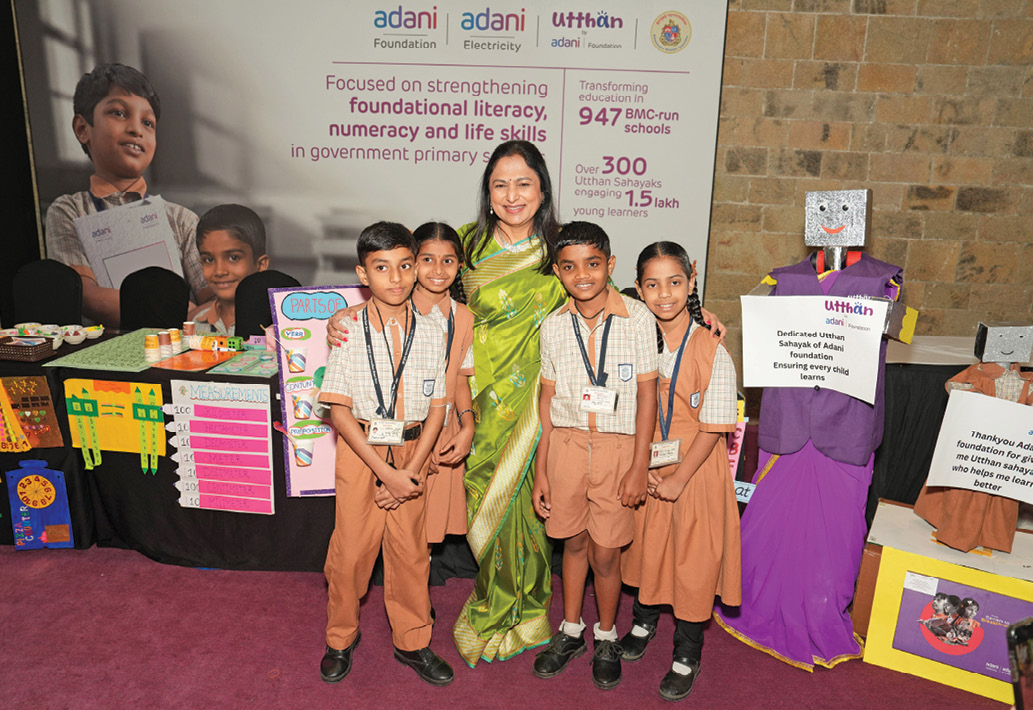
Project Utthan is the Adani Foundation’s flagship education initiative aligned with the National Education Policy (NEP) 2020 and the NIPUN Bharat Mission. The programme focuses on strengthening foundational literacy, numeracy, and life skills in government primary schools through child-centred, experiential, and inclusive learning approaches. It aims to bridge learning gaps and boost the capacity of teachers and school leaders, ensuring that every child achieves the national FLN goals by the end of Grade 3.
Nationwide, Project Utthan is active across five states, supporting more than 1,200 government schools and reaching nearly 1.80 lakh students. With a focused emphasis on mainstreaming ‘Priya Vidhyarthy’ – academically vulnerable students through personalised support and NEP-aligned pedagogical practices, the programme has emerged as a strong model for strengthening government school systems and enabling children to build the skills, confidence, and foundational readiness for future success.
In Mumbai, the Adani Foundation and Adani Electricity have partnered with the Brihanmumbai Municipal Corporation (BMC) and brought all 947 government primary schools under the ambit of Project Utthan. Between 2021 and 2024, the project demonstrated strong results by transforming 83 schools and supporting the progress of more than 25,000 students. With over 300 trained women – Utthan Sahayaks deployed across the city, the initiative is scaling its structured academic model to reach 1.5 lakh young learners and support Mumbai’s progress in foundational learning and National Achievement Survey 2028 (NAS) outcomes.
Dr Priti G. Adani, Chairperson, and Ms Shilin R. Adani, Trustee, Adani Foundation, visited Mumbai and actively participated in FLN activities with BMC students, engaging closely in the learning process. They also interacted with the Utthan core team and appreciated their efforts in strengthening foundational education at the grassroots.
Outcomes
1,47,924
Students across 947 schools across 24 wards of BMC
Baseline Assessment vs Midline Assessment
The Baseline Assessment was conducted in September 2025 across 947 BMC schools, covering students of Classes 1 to 4 across eight mediums, to understand their existing learning levels in reading, writing, and numeracy. The same cohort of students was assessed again through the Mid-line Assessment in February 2026 to measure their progress after structured academic interventions. The mid-line assessment paper was aligned with the National Achievement Survey (NAS) question paper framework, ensuring academic rigor and standardisation.
The comparison between baseline and mid-line results highlights students’ learning growth and helps us evaluate the effectiveness of Project Utthan. Based on these findings, a focused way forward has been designed to further strengthen foundational learning outcomes.


Students Benefited from other Education Related Interventions
600
Infrastructure support provided to 4 Zilla Parishad (ZP) government schools in Gujarat through toilet construction and civil renovation works, improving hygiene, safety, and learning environment.
200
Essential study infrastructure provided, including digital learning tools and classroom furniture.
450
5 RCC toilets with solar-based water supply constructed in girls’ government schools across Bihar and West Bengal.
500
Toilet construction and infrastructure renovation undertaken in 7 government schools across Rajasthan.
3500
Drinking water facilities installed in government schools nationwide, including 91 water coolers and 24 water purifiers.
400
School infrastructure upgraded through painting, renovation, auditorium hall construction, and paver block installation at a government school in Morena, MP.
250
CSR initiative for girls’ sanitation and drinking water facilities, including toilet construction and installation of RO plant and water cooler at Bhaisatara Government School, Rajnandgaon.
100
Shelter construction completed at a government school in Kheri, Mahendragarh, Haryana.
From a Biryani Stall to a Brighter Future
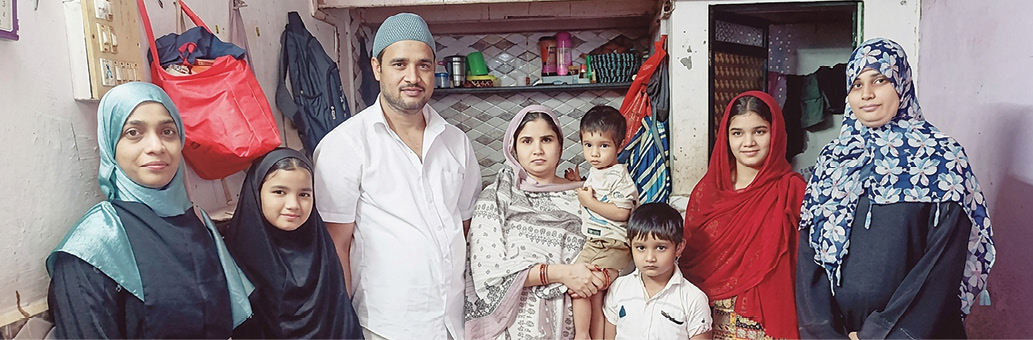
In the bustling lanes of Mumbai’s L Ward, a simple daily interaction became the beginning of a life-changing journey for one family.
Ibrahim Khan, a humble biryani vendor, spent years moving between Gujarat, Uttar Pradesh, and Mumbai in search of work and stability. Life was never easy, and providing two meals a day for his family itself was a constant struggle. In the middle of these hardships, one dream quietly remained alive in his heart- to educate his children and give them a better future.
One of our dedicated Utthan Sahayaks, Mrs Saima Naik, was a regular customer at Ibrahim’s biryani stall. Over time, their everyday conversations built a sense of trust and familiarity. During one such interaction, Saima asked Ibrahim about his children and where they studied.
With helplessness in his voice, Ibrahim shared that his children were not attending school at all. Due to the family’s frequent migration for work and the high cost of education in Mumbai, he had never been able to enroll them in school. The children had remained disconnected from education for years.
Understanding the seriousness of the situation, Mrs Saima Naik, along with her colleague Mrs Sabrina Khan, explained to Ibrahim about the free education facilities available in BMC schools and the various government support systems provided for children.
With continuous guidance and support from the Utthan team, Ibrahim’s three children were successfully enrolled at Magan Nathuram Marathi Medium School, a nearby BMC school:
- Shama Banu – Class 5
- Noorsaba – Class 4
- Jilani – Class 1
The school’s Headmaster, Mr Dharma Kavte, extended compassionate support and ensured that the children were admitted into age-appropriate classes.
However, the challenge did not end with admission.
Since the children had stayed away from formal education for a long time, their learning levels were significantly behind compared to other students. Recognising this gap, the Utthan team provided special academic attention and continuous learning support to help the children gradually adapt to the school environment and improve their educational outcomes.
Today, the same children who had never entered a classroom attend school regularly, learning with confidence, and showing remarkable improvement in their studies.
During a visit by the Utthan team, Ibrahim expressed his gratitude with moist eyes and immense pride. For him, this was more than just school admission, it was the beginning of a new chapter for his family.
Stories like Ibrahim Khan’s remind us that meaningful change often begins with a simple conversation and a caring heart. Through the unwavering efforts of field champions like Mrs Saima Naik and Mrs Sabrina Khan, Project Utthan continues to bring the light of education to children who once stood far away from its reach.
Today, these children are no longer carrying the burden of missed opportunities they are carrying books, dreams, and the hope of a brighter tomorrow.
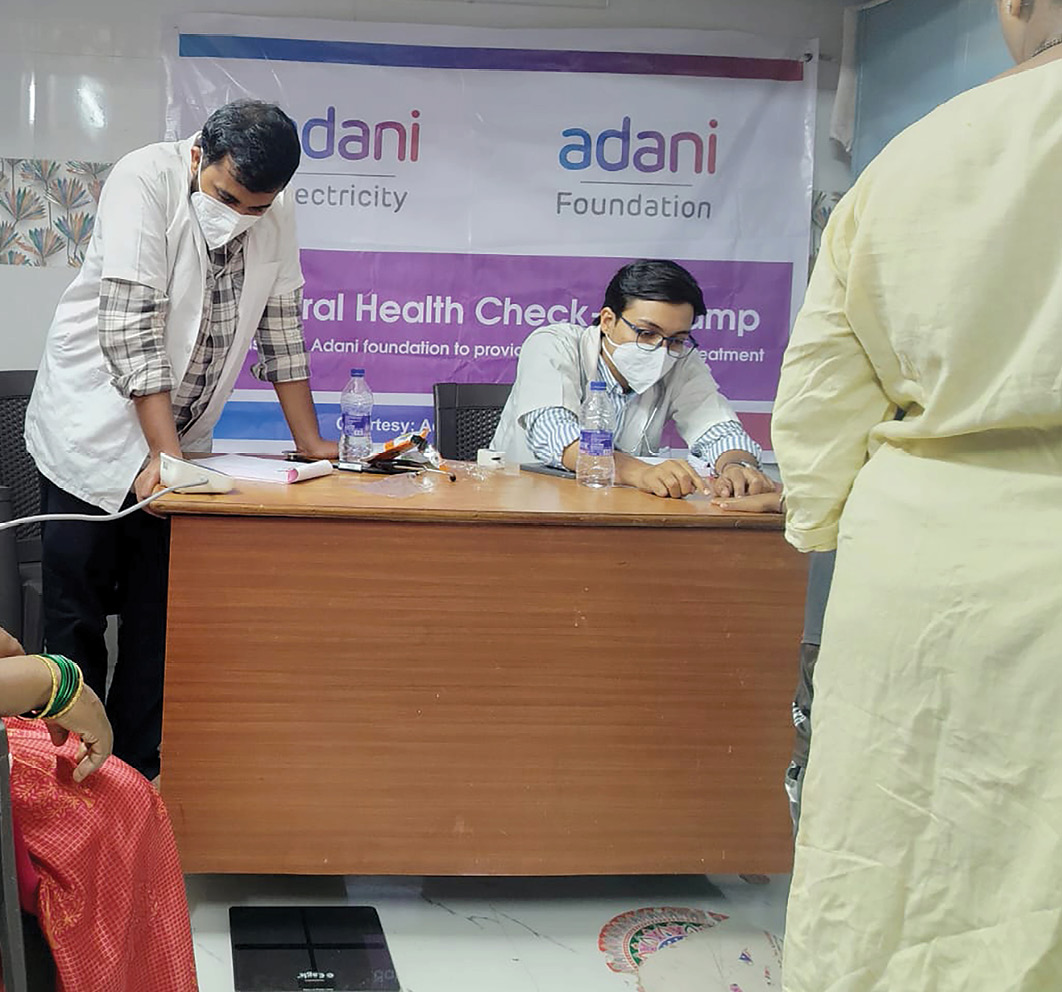
In rural and remote areas, where distance and limited infrastructure restrict access to essential healthcare, the Adani Foundation is bridging critical gaps by reaching the unreached and strengthening local health systems. Our mobile healthcare units, multi-speciality health camps, and rural clinics are vital in ensuring access to primary care to underserved and elderly people with limited mobility. By focusing on both preventive and curative approaches, the Foundation’s healthcare ecosystem is improving the well-being of India’s most vulnerable populations.
Our SuPoshan initiative is instrumental in mitigating malnutrition and anaemia among children, adolescent girls, and women of reproductive age. The project empowers village-level volunteers, SuPoshan Sanginis, who serve as catalysts for behavioural change by monitoring health, providing nutritional counselling, and facilitating life-saving medical treatment.
Adani Eye Care Programme
Programme Goal
To ensure preventive eye care and improve access to basic eye health services
Programme Description
According to the World Health Organisation (WHO), visual impairment affects 314 million people globally, including 45 million who are blind, despite over 80% of cases being preventable or treatable. Nearly 90% of those affected reside in the low- and middle-income countries, where access to eye care remains limited.
The Adani Foundation’s Eye Care Programme, launched in August 2024, provides eye screenings, primary eye-care services, and awareness on eye health to the school-going children, women, the elderly, and truck drivers. The initiative focuses on early detection and prevention of vision problems. Eyeglasses are also provided to the beneficiaries requiring corrective vision support. Through this programme, the Adani Foundation reaffirms its commitment to preventive eye care, improving overall health and well-being.
Outcomes
3,825
Women screened
1,204
Students screened
Impact Created
3,205
Women received free spectacles
141
Students received free spectacles
CSR Activity at Government Medical College Akola
Under the Company’s CSR initiative, Plasma Freezer and Donor Chair have been successfully donated to Government Medical College, Akola, Maharashtra. This contribution aims to strengthen the blood bank and transfusion facilities of the institution by ensuring safe plasma storage and improving donor comfort during blood donation procedures.
The support will directly benefit patients from economically weaker sections by enhancing availability of blood and plasma during emergencies and critical care situations. The initiative contributes to improved healthcare infrastructure, emergency preparedness, and quality of public medical services in the region. This CSR activity reflects the Company’s commitment towards supporting public healthcare systems and creating meaningful social impact.
Datta Meghe Institute of Higher Education & Research (DMIHER), Sawangi (M), Wardha, is an eminent deemed university recognised for its integrated approach to sustainable healthcare and health professions education. With a strong foundation in community-oriented and evidence-based learning, the institute has developed a comprehensive academic ecosystem comprising 15 constituent units across disciplines such as medicine, dentistry, nursing, physiotherapy, pharmacy, and allied health sciences. It offers over 260 academic programmes with a student strength exceeding 12,000, supported by competency-based, outcome-driven education and technology-enabled learning systems that prepare future-ready healthcare professionals.
The institution has recently strengthened its role as a leading healthcare provider through its expansive AROGYA-SETU healthcare network, which includes 10 hospitals, 2,700 beds, more than 200 ICU beds, and 25 operation theatres. Backed by over 350 consultants and multiple specialty and super-specialty units, the institution delivers a wide continuum of care—ranging from primary and preventive services to advanced tertiary care, including transplants, cancer treatment, robotics, and traditional systems like Ayurveda and Homeopathy. Its services are particularly focused on underserved populations in Central India, including rural and tribal communities, thereby aligning clinical excellence with social responsibility.
A significant recent emphasis at DMIHER has been oncommunity outreach and inclusive healthcare delivery, reflected in its adoption of 86 villages and outreach to over 26,000 households through satellite centers, health schemes, and extensive screening programmes. Nearly 1.97 million patients have been screened, with large-scale referral and treatment linkages established. The institute’s holistic model integrates education, service, and research with initiatives such as comprehensive healthcare programmes, digital learning platforms, and interprofessional training. Through its mission of fostering resilient, technology-driven and socially responsive healthcare systems, DMIHER continues to evolve as a nationally significant institution working towards equitable and sustainable health development.
As part of a collaborative project involving multiple companies of Adani group, the Adani Foundation has partnered with DMIHER to establish a global Centre of Excellence in healthcare education and delivery. This collaboration, announced in June 2025, aims at upgrading DMIHER’s 15 institutes and 5 hospitals to enhance medical education and clinical research.
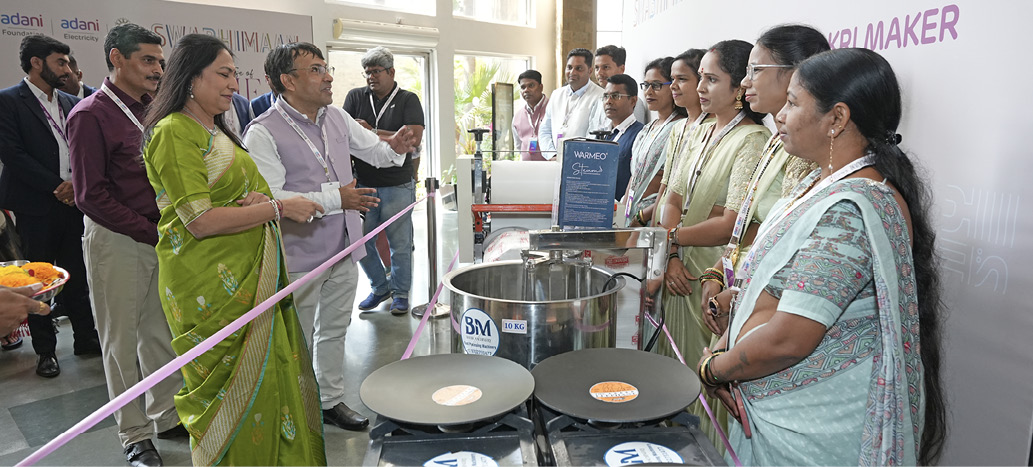
The Adani Foundation is enhancing income levels of the households by building a self-sustaining ecosystem that leverages community resources for socio-economic progress. The Foundation drives impactful change across on-farm, off-farm, and non-farm sectors, fostering resilience, inclusion, and lasting social impact, shaping resilient communities.
Our initiatives focus on boosting, diversifying, and sustaining incomes through:
- Women-led Enterprises: Recognising women as powerful agents of change, the Foundation promotes women entrepreneurship by fostering leadership, enhancing knowledge, and ensuring access to critical networks and markets.
- Project Saksham: This skilling programme equips youth with invaluable technical and entrepreneurial skills, propelling them toward greater employability and self-reliance.
- Sathwaro: Dedicated to empowering India's artisan communities, this initiative transforms traditional and cultural heritage into viable, income-generating opportunities.
- Agricultural Development: Programmes in natural farming, animal husbandry, and dairy development help farmers leverage technology to boost yields and resilience.
Project Swabhimaan: Advancing Women Entrepreneurship and Financial Inclusion
Programme Goal
To empower women from underserved communities by enabling entrepreneurship, financial inclusion, and sustainable livelihood opportunities
Programme Description
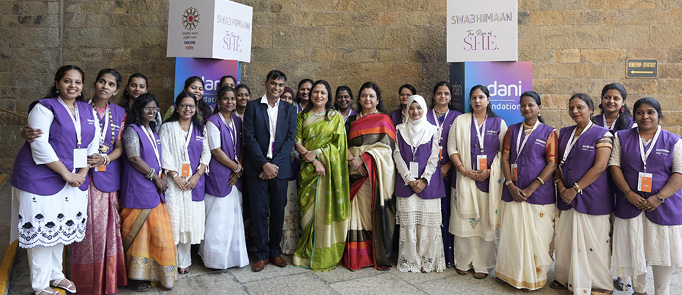
Launched in 2022, the Swabhimaan Project is implemented by the Adani Foundation in partnership with Adani Electricity Mumbai Limited and Mahila Arthik Vikas Mahamandal (MAVIM). The initiative focuses on strengthening the socio-economic status of women in dense urban clusters such as Mira Road, and Malad of Mumbai.
The programme mobilises women into Entrepreneur Self-Help Groups (ESHGs), enabling them to build financial discipline, access formal credit systems, and develop sustainable enterprises. It addresses key barriers, such as limited access to finance, lack of entrepreneurial skills, and restricted market linkages.
Through targeted capacity-building interventions, women are trained in financial literacy, enterprise management, digital banking, pricing, and inventory management. The initiative also supports market integration, enabling women to transition from informal livelihoods to structured, income-generating enterprises across sectors, such as tailoring, catering, food processing, handicrafts, and home-based businesses.
Outcomes
4,000+
Women mobilised
280+
Entrepreneur Self-Help Groups (ESHGs) formed
₹ 2 crore+
Savings corpus built
₹ 6 crore
Institutional credit facilitated (FY 2023-24)
1,500+
Individual credit linkages established
Impact Created
247
New savings bank accounts opened
1,600+
Women-led micro-enterprises supported
Swateja Mart: Enabling Market Access for Women Entrepreneurs
Programme Goal
To strengthen market linkages and ensure sustainable income generation for women entrepreneurs
Programme Description
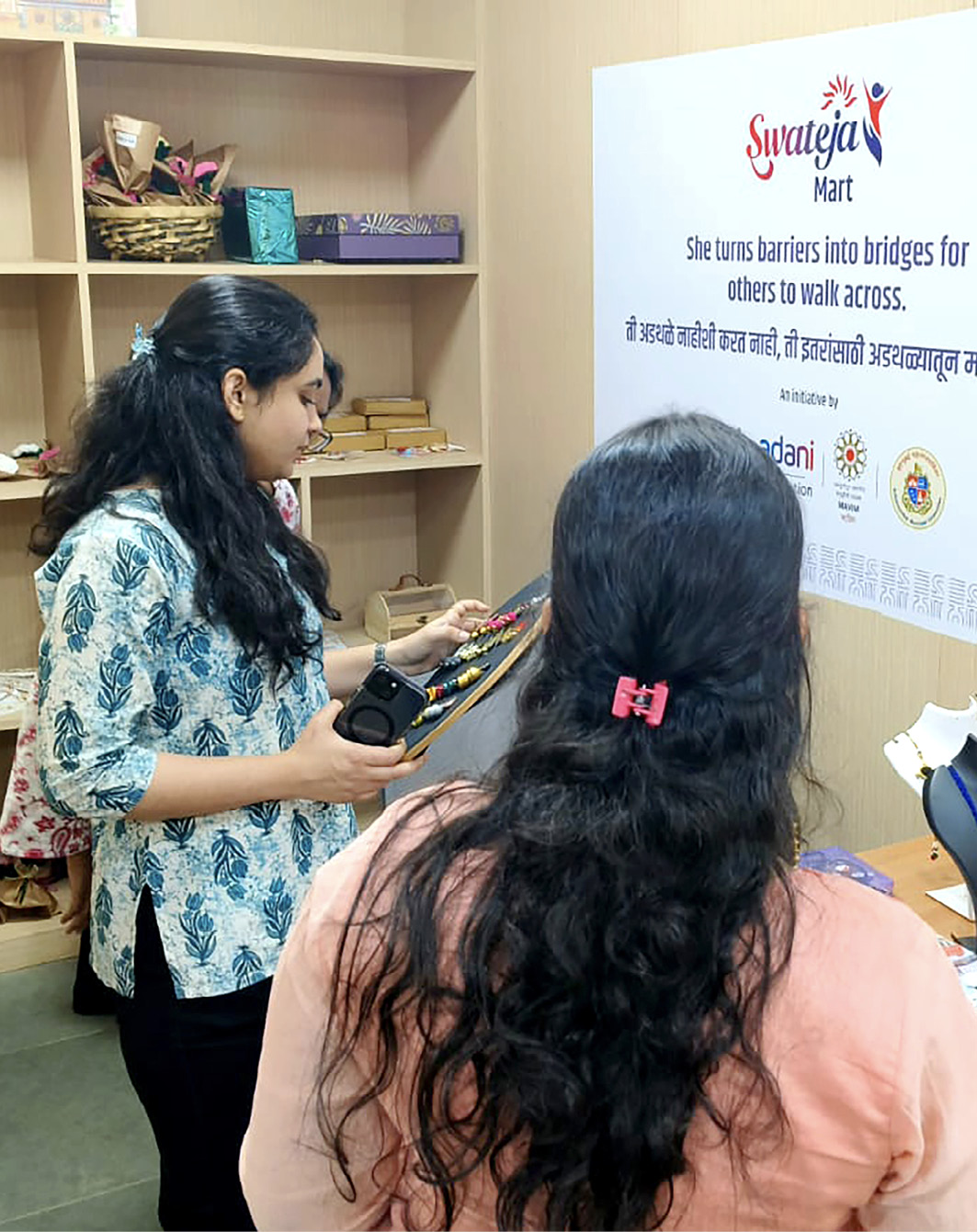
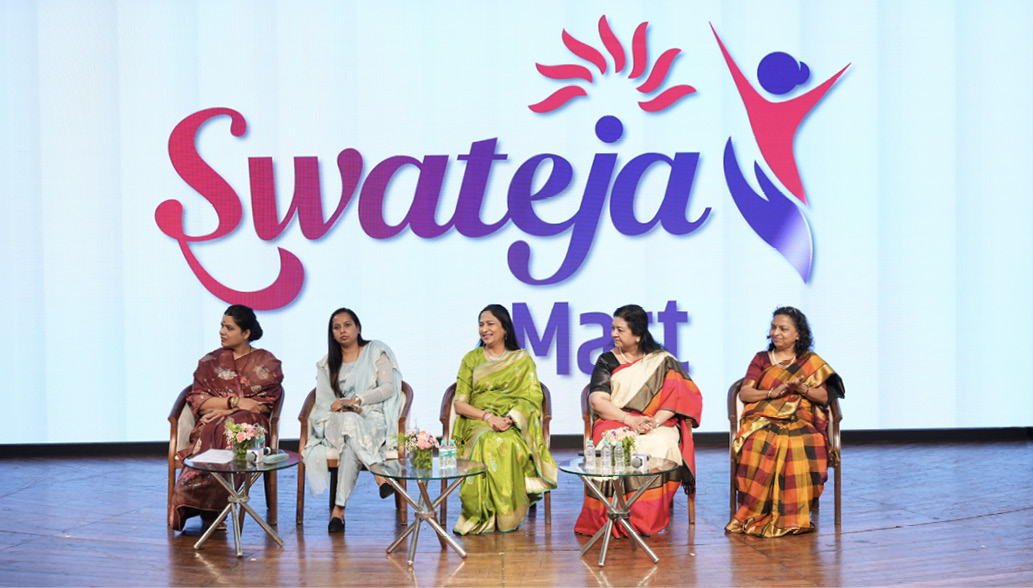
Swateja Mart, an initiative under the Swabhimaan project in Malad, Mumbai, is a women-led marketplace managed by members of the Samruddhi Community Managed Resource Centre (CMRC). Supported by Adani Electricity, the Adani Foundation, and MAVIM, the platform connects women entrepreneurs from underserved communities with a growing base of conscious consumers, enabling them to transform their skills into sustainable sources of income.
The initiative brings together Entrepreneurship Self-Help Groups (ESHGs) and enables them to showcase and sell a diverse range of products, including handcrafted items, homemade food products, and services. It also includes the Swateja Cloud Kitchen, which provides freshly prepared meals through both direct and app-based delivery channels.
Through exhibitions, retail touchpoints, and institutional platforms such as Adani Electricity offices, Mantralaya, and Chhatrapati Shivaji Maharaj International Airport (T2), Swateja Mart creates consistent market access. The programme also ensures adherence to quality and regulatory standards, including food safety and hygiene certifications.
Outcomes
4,500+
Women entrepreneurs connected through Swateja Mart
100+
Women trained and certified in food safety and hygiene standards
800+ “Lakhpati Didis”
Earning over ₹ 1 lakh annually
Impact Created
₹ 1 crore+
Annual sales generated
₹ 15 crore+
Cumulative grassroots economic circulation created
Adversity to Entrepreneurship – The Story of Neha Patil
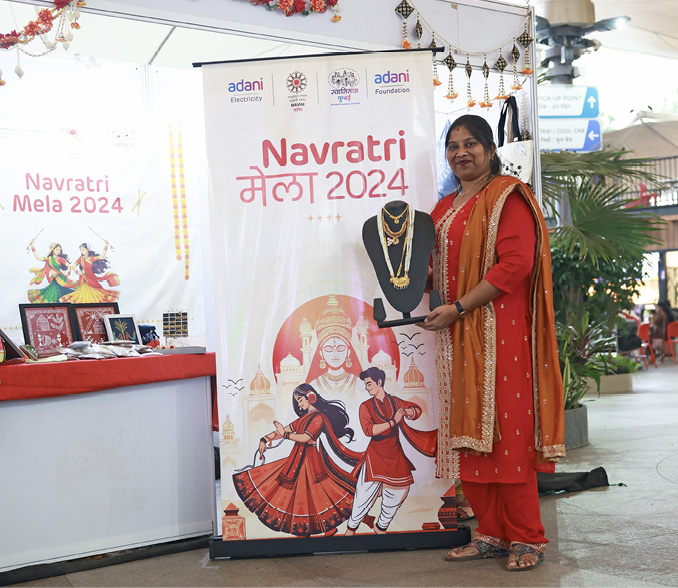
The setback: When the lockdown struck, life took an unexpected turn for Neha Patil. For 12 years, she had worked as a data entry operator with the BMC, balancing the demands of work with a natural love for creativity. Then, without warning, her contract ended—at the toughest moment, just after her maternity period. With two young sons to support and no stable income, Neha found herself facing an uncertain road ahead.
The turning point: In that moment of adversity, a new beginning was quietly waiting. Amid the confusion and fear, Neha came across the Adani Electricity and Adani Foundation’s Swabhimaan programme. She learned that it trained women in income generating skills and supported them in becoming financially independent. With courage—and a spark of hope—she decided to give it a chance.
Learning a craft: Neha enrolled in a five day jewellery making training, and from the very first day something inside her came alive. The work felt familiar—like a passion she had always carried but never had the opportunity to pursue professionally. As she practised each technique, her skills sharpened and her confidence grew. She learned to create:
- Moti Maal
- Nath
- Earrings
- Tanmani sets
- Bangles
- Thushi pieces
After completing the training, Neha began creating traditional jewellery pieces at home—each one crafted with care and pride. Her initial investment was just ₹ 10,000, but her determination was far greater.
Finding a market: Still, one question remained: Where will I sell my products? The Swabhimaan programme answered that, too.
With support from Swabhimaan, Swateja Mart, and various exhibitions, Neha’s creations began reaching more people. Customers admired her craftsmanship. Orders grew, and word spread. Slowly and steadily, her home based effort transformed into a thriving jewellery business.
What changed: Within just a few months, Neha earned over ₹ 2 lakh in sales. With her newfound income, she achieved dreams she once believed were out of reach—buying a refrigerator worth ₹ 30,000 from her own earnings and fulfilling her long cherished wish to visit Akkalkot for darshan. Most importantly, she continued supporting her two sons’ education with pride and independence, hoping they will grow up to become professionals such as a doctor or an engineer. Neha believes the Swabhimaan project will help her turn that dream into reality.
Looking ahead: Today, Neha is no longer the woman who lost her job. She is an entrepreneur—determined, skilled, confident, and full of dreams. She now aims to expand her jewellery business tenfold, carrying forward the momentum she has built through dedication and hard work.
Neha’s journey—from sudden unemployment to becoming a successful businesswoman—is a reminder that empowerment begins with opportunity. It is also an example of how Adani Electricity and the Adani Foundation’s Swabhimaan programme provides end to end support to beneficiaries. Through this platform, Neha found not just a livelihood, but a renewed sense of purpose, dignity, and hope.
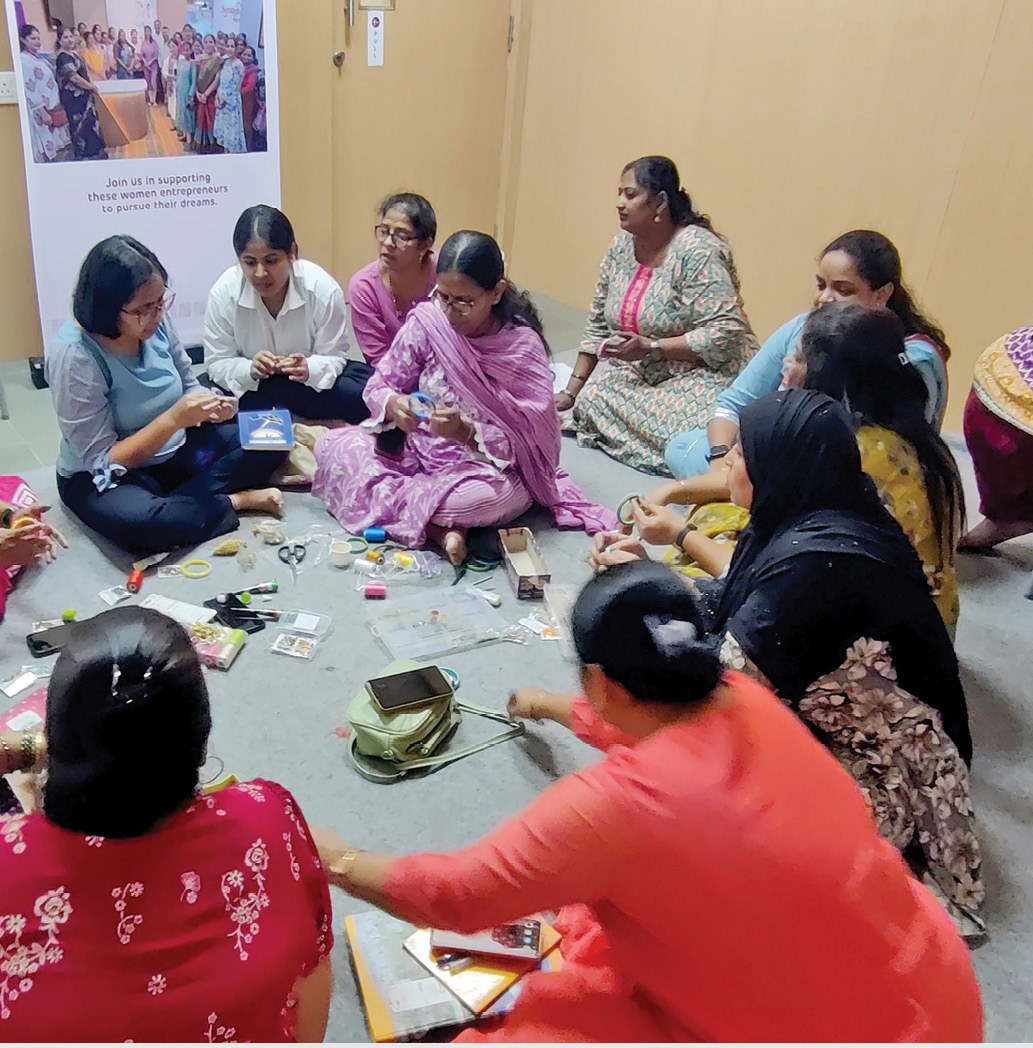
The Adani Foundation is dedicated to fostering thriving, self-reliant communities rooted in inclusion, dignity, and meaningful partnership. Through a comprehensive strategy and interventions, the Foundation aims to uplift the quality of life, enhance potential, and bolster the growth of the communities.
Key Pillars of Community Development Include:
Infrastructure Development
Construction of essential infrastructure, such as roads, water conservation systems, drinking water access points, and installation of streetlights to improve quality of life.
Disaster Support & Crisis Aid
Offer immediate aid and support to communities during times of crisis, natural calamities and major accidents.
Empowerment & Inclusion
Facilitate access to government schemes, championing sports to cultivate unity and discipline, and provide greater opportunities for the specially-abled to ensure no one is left behind.
Community Engagement
Focus on boosting opportunities and engagement to foster resilience and lasting prosperity, transforming communities into vibrant, self-sufficient ecosystems.
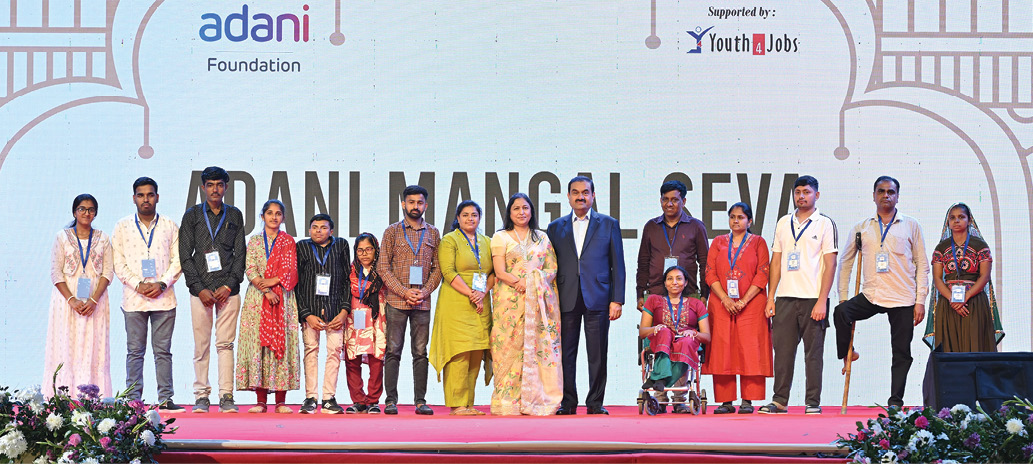
The Mangal Seva initiative by Adani Foundation is a targeted social welfare programme designed to promote dignity, financial independence, and long-term security for newly married women with disabilities. Under this model, each selected beneficiary is supported through the creation of a fixed deposit of ₹ 10 lakh for a period of 10 years. While the principal amount remains with them and is released at maturity, while a steady monthly interest payout (approximately ₹ 5,416) provides regular income, enabling beneficiaries to meet household needs, investment towards livelihoods, access to healthcare, or pursuance of higher education.
The programme adopts a structured, transparent selection and verification process involving field outreach, document validation, and home visits, ensuring that support reaches deserving candidates. Beyond financial assistance, Mangal Seva aims to strengthen social security and inclusion by enhancing the economic agency of women with disabilities and reducing their vulnerability post marriage. By combining financial planning with social empowerment, the initiative creates a sustainable pathway for improving quality of life and fostering long-term resilience among beneficiaries.
So far, the project has enrolled 500 beneficiaries and envisages to reach to 2000 candidates over next four years. It is a collaborative programme with multiple group companies participating in it.
Meri Sangini, Meri Margdarshika (MSMM): Building Awareness on Social Welfare Schemes
Programme Goal
To enhance awareness about government welfare schemes among rural communities
Programme Description
Meri Sangani, Meri Margdarshika (MSMM) is a unique initiative of the Adani Foundation, aimed at raising awareness about critical government welfare schemes on employment, healthcare, financial inclusion, and education. The programme is implemented across 13 villages in Nagpur district, Maharashtra, reaching a population of over 16,000 people.
The project strengthens capacities in MSMM Sanginis (community-facilitating women) to conduct regular field visits, collect baseline family data, hold focused group discussions and disseminate information about relevant schemes in surrounding villages. These Sanginis also foster strong linkages with local government departments, helping families navigate application processes and avail benefits effectively.
Key activities include regular engagement with Anganwadis, schools, community health centres, and panchayats, community meetings to encourage women participation, and awareness sessions on girl education, and documentation required for accessing schemes.
The initiative has facilitated enrollment and application support for several schemes, including Atal Pension Yojana, PM Kisan Samman Nidhi, widow and old-age pensions, Palanhar Yojana, Sukanya Samriddhi Yojana, PMJJBY, PMSJBY, Ayushman Bharat, and labour welfare schemes. In addition, the Foundation has supported beneficiaries in obtaining essential documents such as Aadhaar cards, PAN cards, ration cards, domicile and income certificates, caste certificates, and bank accounts.
Outcomes
13
Villages participated across Nagpur district, Maharashtra
16,000+
People reached out through MSMM programme
Impact Created
2,608
Beneficiaries availed legal documents, such as PAN card, Aadhaar card, income certificates, etc.
2,999
Beneficiaries of government schemes, such as Ayushman Bharat Yojana, Crop Insurance, Ladki Bahin Yojna, Kisan Card, Shram Card, etc.
₹ 95.28 crore
Entitled through schemes with direct monetary as well as linked potential benefits for a total of 1,580 units, such as Atal Pension Yojana, PMSBY, PMJJBY, Sukanya Samriddhi, etc.
₹ 1.14 crore
Monetised through schemes with direct yearly as well as one-time benefits for a total of 345 units, such as Shravan Bal Yojana, PM Matru Vandana Yojana, etc.
Khushi’s Journey from Struggle to Stability and Security
Khushi Pradip Kumare, a 25-year-old resident of Zilpa village, lives with her family of six and works as a farm labourer. During harsh climatic conditions, irregular earnings affect her income, impacting her children’s nutrition, health, and education. Despite the challenges, Khushi was determined to secure a better future for her daughters.
She learned about the Lek Ladki Yojana at the local Anganwadi centre, a government scheme designed to provide financial assistance to underprivileged girls. The scheme could support her daughter’s education and well-being. However, limited awareness of documentation and application prevented her from completing the process.
Through the Adani Foundation’s MSMM initiative, Khushi received step-by-step guidance from a community Sangini, who helped her obtain essential documents, open a bank account, and submit her application. In December 2025, Khushi received the first installment of ₹ 5,000 directly into her bank account and became eligible for financial support of up to ₹ 1 lakh under the scheme. This assistance will enable Khushi to improve her daughter’s education and healthcare, reducing her financial hardships and empowering confidence.
Inspired by her experience, she spreads awareness about the scheme among other women in her village, encouraging them to access and benefit from such programmes.
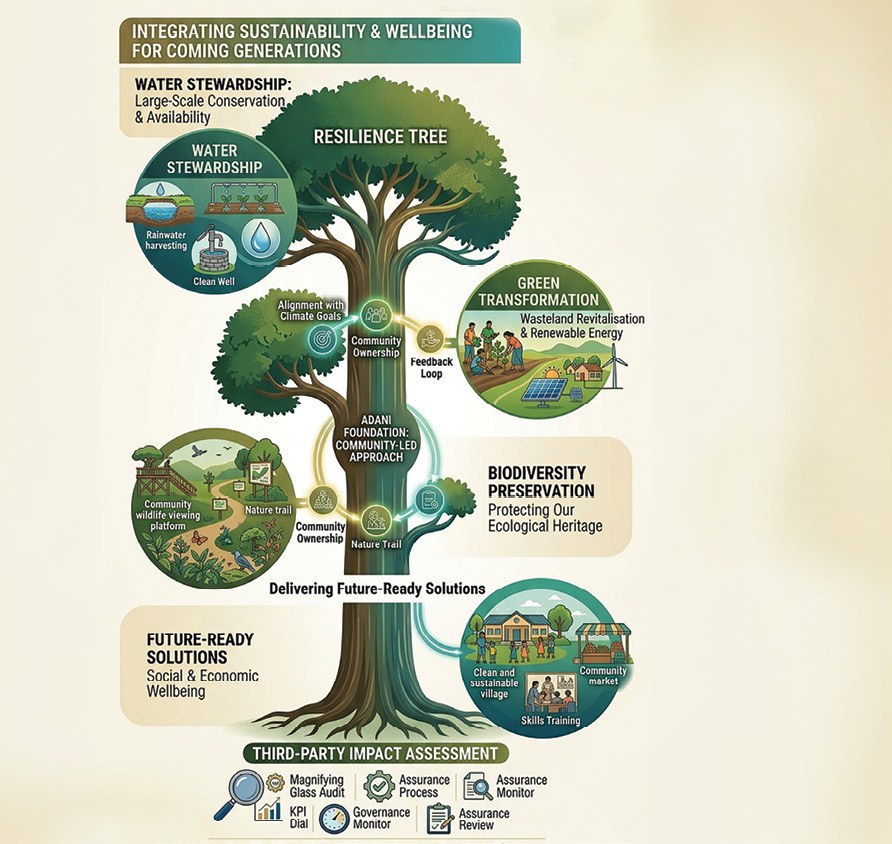
Amid growing climate uncertainty and resource scarcity, the Adani Foundation is advancing a community-led, forward-thinking approach to climate resilience. By integrating water stewardship, biodiversity preservation, and renewable energy adoption, the Foundation addresses the most pressing ecological challenges while laying the foundations for sustainable communities. Our efforts extend beyond environmental protection to deliver future-ready solutions for enduring social and economic well-being for the coming generations.
Our climate initiatives focus on:
Green Transformation
Developing and revitalising wastelands through structured plantation drives and increasing the use of renewable energy to enable a cleaner and greener society.
Water Stewardship
Promoting large-scale conservation of water to ensure its availability for domestic and agricultural purposes throughout the year.
Key Interventions
Programme Goal
- Tree Plantation under 100 million trees by 2030
- Renewable energy - solar street lights in villages
- Solar panel installation at rooftop of schools.
Solar Street Lights:
₹ 8.55 Lakh
annual saving, 100 TCo2 Emission avoided
Programme Description
Plantation: An estimated 9,116.39 MTPA CO2 equivalent sequestration potential has been assessed under the Carbon Credit Model, with progressive annual increase expected as plantations mature.
Solar Panel (school):
₹ 18 Lakh
annual saving
Outcomes and Impact
A target of 2 lakh saplings has been planned with a scientific 1m ×1 m plot layout, optimising land use efficiency and long-term survival.
12 indigenous, native, bio-indicator species, predominantly evergreen and fire-risk-free, have been selected to enhance ecological balance and local biodiversity.
Solar Street light installation: 620 lights in 15 villages
Solar panel at School rooftop: 6 schools; 97 KW solar capacity