

Procuring Ethically and Sustainably
At Adani Energy Solutions, we are committed to building a sustainable, transparent and ethically governed supply chain. Sustainability is embedded across all our procurement decisions, from rigorous supplier selection and local sourcing to continuous performance monitoring. By integrating ESG considerations into decision-making, we strive to ensure that the far-reaching impacts of our business operations are positive and beneficial to all stakeholders involved.
Material Topics
Strategic Priorities
Key Risks and Opportunities
Capitals Impacted
 Social & Relationship Capital
 Natural Capital
SDGs Aligned




We are committed to building a sustainable, transparent and ethically governed supply chain.

926 suppliers
in network (30% increase as compared to FY 2024-25)
213
New suppliers added, out of which 41% were identified as significant Tier 1 suppliers
100% New
Suppliers assessed using ESG criteria (including 100% critical suppliers)
Tier 1 Suppliers by Top Ten Sourcing Locations
| # | State | Number of Suppliers | % Spends |
|---|---|---|---|
| 1 | Gujarat | 264 | 35% |
| 2 | Uttar Pradesh | 47 | 17% |
| 3 | Rajasthan | 44 | 16% |
| 4 | Maharashtra | 248 | 11% |
| 5 | Madhya Pradesh | 29 | 6% |
| 6 | Karnataka | 21 | 5% |
| 7 | Uttarakhand | 26 | 3% |
| 8 | Tamil Nadu | 30 | 2% |
| 9 | West Bengal | 24 | 2% |
| 10 | Dadra and Nagar Haveli, Daman and Diu | 5 | 1% |
| Total | 738 | 98% |
Sustainable Supply Chain Strategy
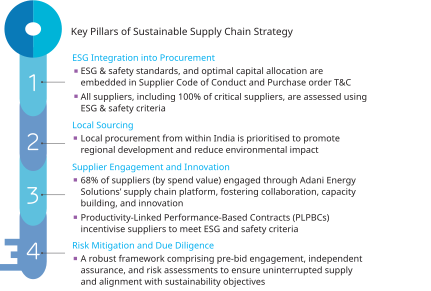
At Adani Energy Solutions, sustainability is operationalised across every procurement decision through a structured responsible sourcing framework that integrates ESG considerations and minimises negative impacts across our value chain. We prioritise partners with certified environmental systems, safe labour practices, and efficient resource use, integrating these criteria into supplier selection, contract negotiations, and ongoing supplier evaluations. Continuous process reviews ensure alignment with global standards, regulatory requirements, and stakeholder expectations.
Our supplier ESG programme promotes adoption of global standards (e.g., ISO 14001, ISO 45001, ISO 50001, SA 8000, GRI, UNGC principles, CDP & S&P CSA frameworks etc.). It encourages suppliers to disclose ESG performance, including Zero Waste to landfill, SBTi & Net Zero targets.
10%
variable pay for Adani Energy Solutions procurement team members is tied to achieving ESG goals
Governance and Accountability

Oversight Structure
- The Board-level Corporate Responsibility Committee (CRC) provides strategic oversight of supply chain practices
- Senior management, comprising the MD/CEO and CSO, reviews procurement and supply chain performance monthly and provides quarterly briefings to the CRC

Accountability
- Ethical sourcing targets and human rights compliance are embedded in KRAs, performance evaluations, and remuneration of sourcing teams
- Buyer team is accountable for ensuring all statutory and ESG criteria are met, as part of their KRAs
- Suppliers are required to submit a declaration confirming adherence to the Company’s Supplier Code of Conduct
- Once statutory obligations are verified, the IR team authorises the Finance team to release payments

Audits and Assurance
- Regular supplier assessments, audits, and performance reviews are conducted throughout the year, with escalation as needed for critical or high-risk suppliers
- Supply chain management process, including supplier onboarding and capacity building, is independently assured by TUV
- Compliance is verified through third-party audits, both announced and unannounced

Continuous Monitoring and Engagement
- Supplier performance against ESG criteria is continuously tracked
- Regular engagement, communication and training programmes for supply chain partners and procurement teams drive improvements
Compliance with Supplier Code of Conduct
Adani Energy Solutions’ Supplier Code of Conduct anchors its responsible sourcing approach, addressing labour rights, environmental stewardship, and anti-corruption. The Code is communicated to suppliers during onboarding via the ARIBA portal and reinforced through training, workshops, and ongoing engagement. Compliance is a mandatory contractual requirement, verified and tracked through desk and on-site assessments, independent third-party audits, regular reviews, supplier self-disclosures, performance scorecards, and continuous feedback mechanisms. Further, our Procurement Policy complements the Code by emphasising innovation, ESG integration, and risk mitigation, with clear guidelines for supplier selection and management.
Read furtherSupplier Code of ConductEmpowering Regional Supply Networks Through Strategic Sourcing
The Company follows a location-responsive sourcing philosophy tailored to its widespread presence across India, strategically stimulating regional economies and supply chain resilience.
Key Definitions
Regional/Local Vendors
These suppliers are situated within or around Adani Energy Solutions’ operational and project territories. Given the Company’s active footprint in 16 Indian states, any supplier operating within the national boundary is deemed regional for strategic alignment, in accordance with globally recognised sustainability benchmarks.
Significant Operational Hubs
These are high-impact business zones defined by the scale of commercial activity, strategic relevance, and growth potential, catalysing both local economic momentum and enterprise-level advancement. These hubs anchor Adani Energy Solutions’ sourcing model and procurement approach, channelising investment into communities while reinforcing the Company’s sustainability agenda.
99.9%
of the procurement budget at significant locations of operation is spent on suppliers local to that operation
Local Procurement
| Particulars | FY 2022-23 | FY 2023-24 | FY 2024-25 | FY 2025-26 |
|---|---|---|---|---|
| Procurement from MSMEs | 12.02% | 15.1% | 20.8% | 16.8% |
| Procurement within same & neighbouring districts | 8% | 8% | 12.08% | 36.1% |
| Procurement within India | 99.93% | 99.81% | 98% | 99% |
Significant Suppliers
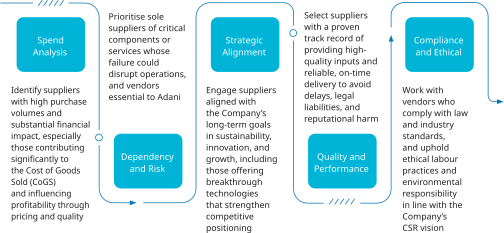
At Adani Energy Solutions, significant suppliers are those whose products or services have a material influence on the Company’s operational performance, strategic direction, and reputation. These suppliers play a pivotal role in project execution, represent a substantial portion of the Company’s procurement budget, and are fundamental to achieving key business outcomes.
Significant Supplier Identification Criteria
| Particulars | FY 2022-23 | FY 2023-24 | FY 2024-25 | FY 2025-26 |
|---|---|---|---|---|
| Total number of Tier-1 suppliers | 565 | 615 | 713 | 926 |
| Total number of significant suppliers in Tier-1 | 34 | 45 | 32 | 91 |
| % of total spend on significant suppliers in Tier-1 | 87.72% | 96.83% | 22.3% | 99% |
| Total number of significant suppliers in non-Tier-1 | 1 | 0 | 09 | 105 |
| Total number of significant suppliers (Tier-1 and non-Tier-1) | 35 | 45 | 41 | 196 |
Supplier ESG Due Diligence and Risk Assessment Framework
Supplier Screening and Risk Assessment
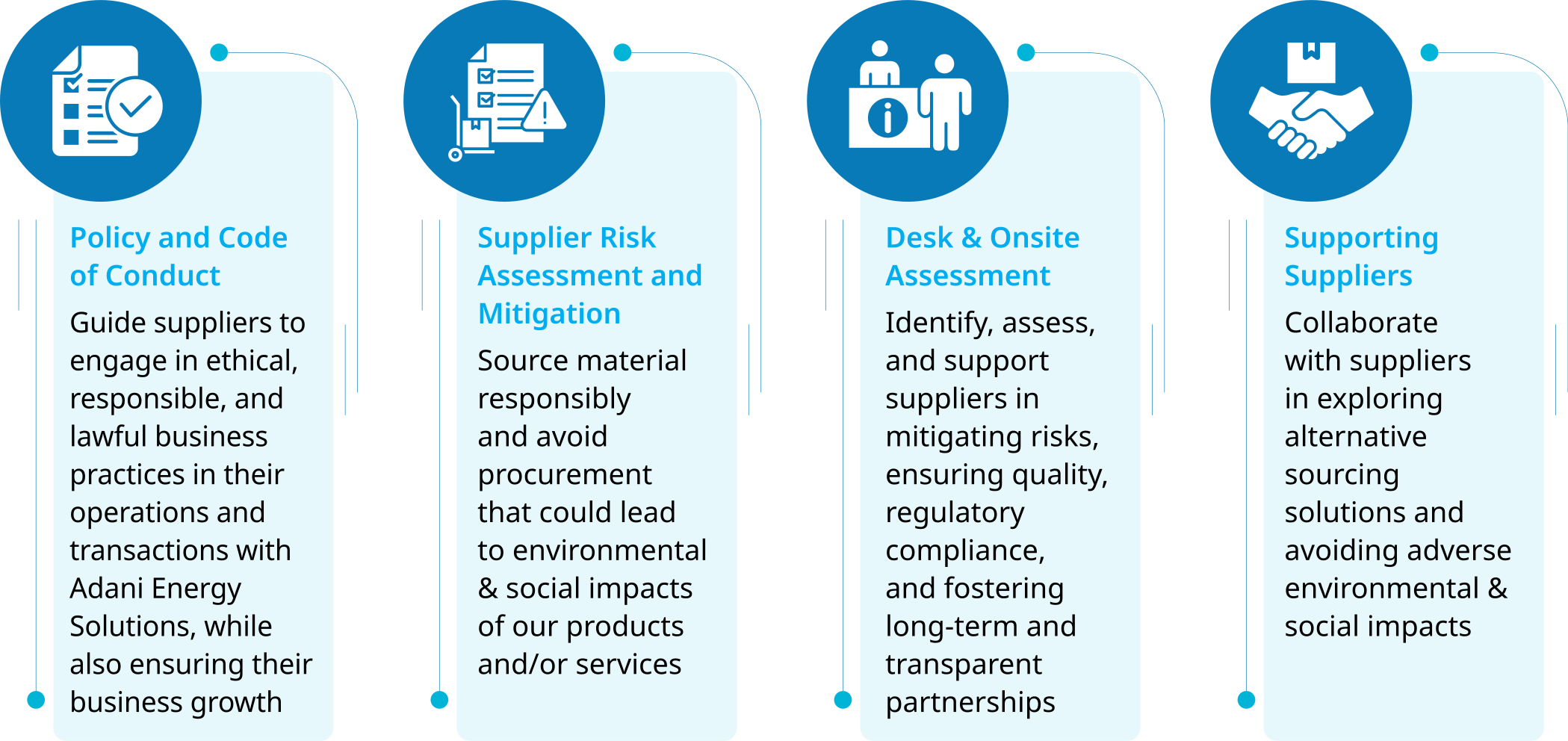
For strategically important suppliers, we undertake an independent evaluation of financial health, operational capability, and ESG performance before entering into contractual engagement. This external assessment evaluates a supplier’s ability to deliver consistently under adverse or unforeseen conditions.
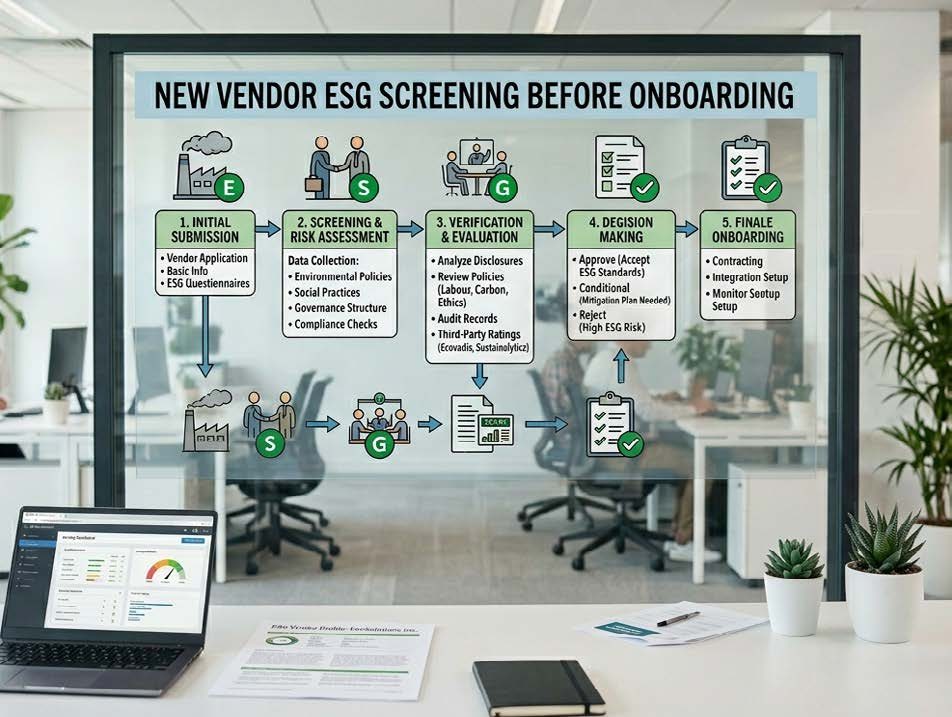
New Vendor Screening Criteria
ESG Criteria
- Environmental: ISO 14001 Certification, GHG, water, waste, packaging
- Social: Human rights, working conditions, safety compliance
- Risk Profile: Country-specific, sector-specific and commodity-specific risk exposure
- Compliance: Statutory, regulatory and legal
- Certifications: ISO standards, SA 8000, Zero Waste to Landfill (ZWL)
Techno-Commercial Criteria

Quality

Financial stability

Manufacturing and testing facilities

Expenditure on commodities
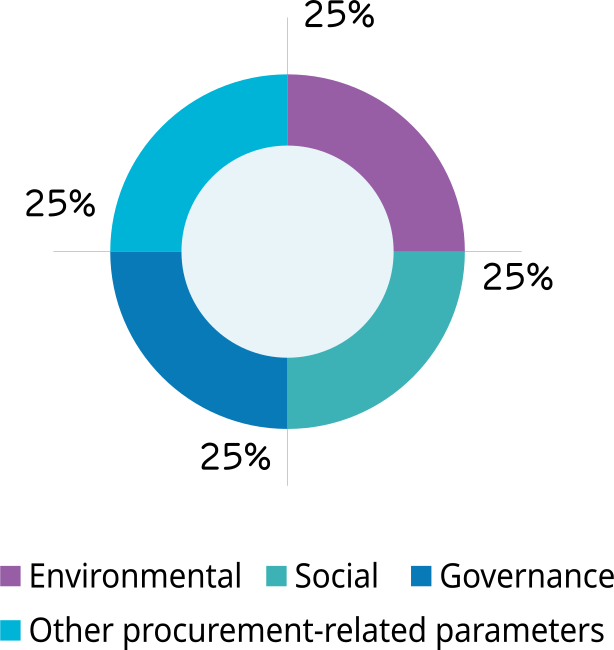
Weightage Framework
Risk Mitigation Approach
Country-Specific Risks
- Continuous monitoring of geopolitical events, including assessment of country-level stability and regulatory environments, ensures operational continuity
Sector-Specific Risks
- Strategic tie-ups help secure the timely availability of essential goods and services to maintain project timelines and operational efficiency amid the rising transmission demand
Commodity-Specific Risks
- Sourcing high-demand equipment such as switchgear from renowned suppliers
- Sustainability studies are conducted to ensure responsible production practices
- Use of green transformer oils (such as ester oil) is promoted to support environmental objectives
Human Rights Due Diligence
All new suppliers undergo mandatory human rights due diligence as part of their selection process. Supplier screening is aligned with global frameworks such as GRI Standards, UN Global Compact Principles, and India’s BRSR requirements. All our suppliers are required to comply with a minimum set of labour standards and workers’ rights as outlined in our Group Human Rights Policy and Supplier Code of Conduct that includes:
- Prohibition of forced and child labour
- Non-discrimination and equal opportunity
- Freedom of association and collective bargaining
- Safe and healthy working conditions
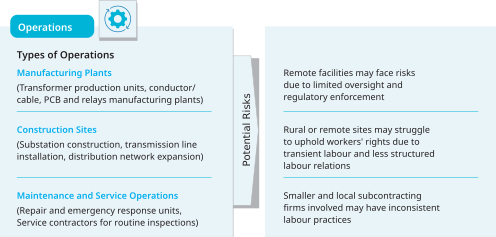
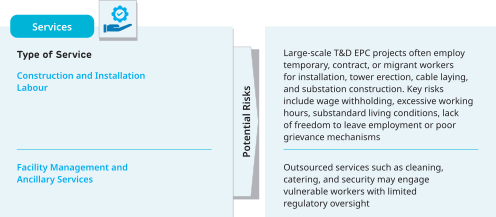
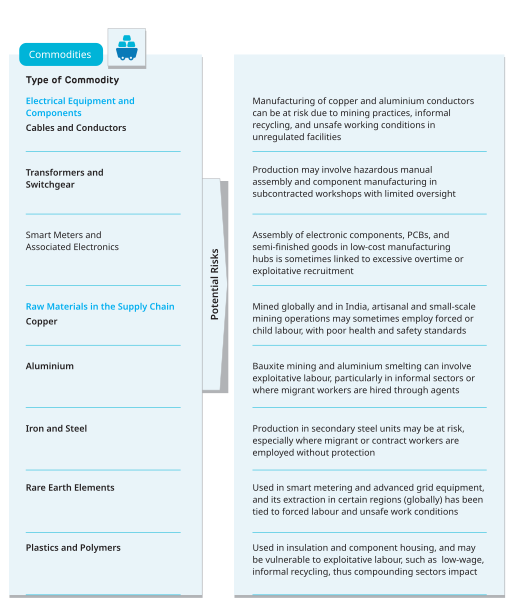
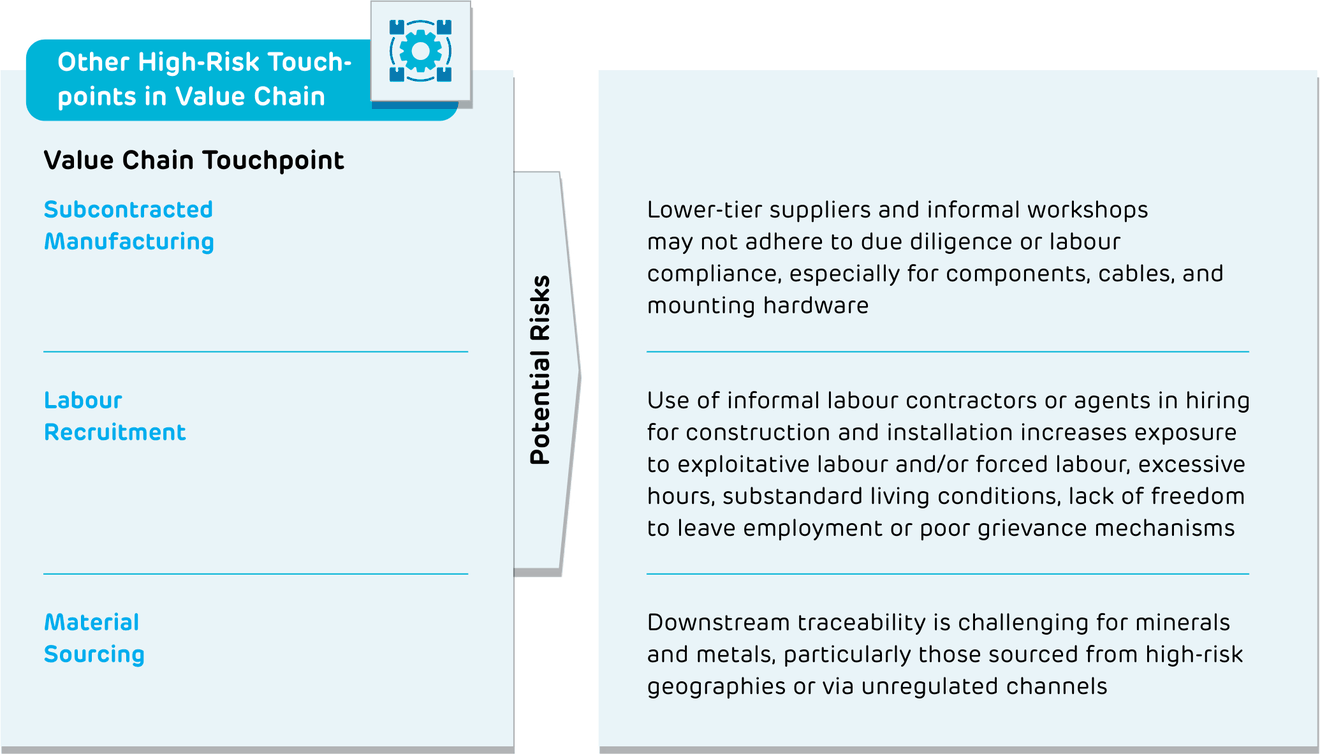
Risk Mapping Across Supply Chain
Adani Energy Solutions systematically maps supply chain risks across geographies, operations, commodities and services to identify high-risk exposure areas and strengthen preventive controls.
Compliance and Post-Assessment Support
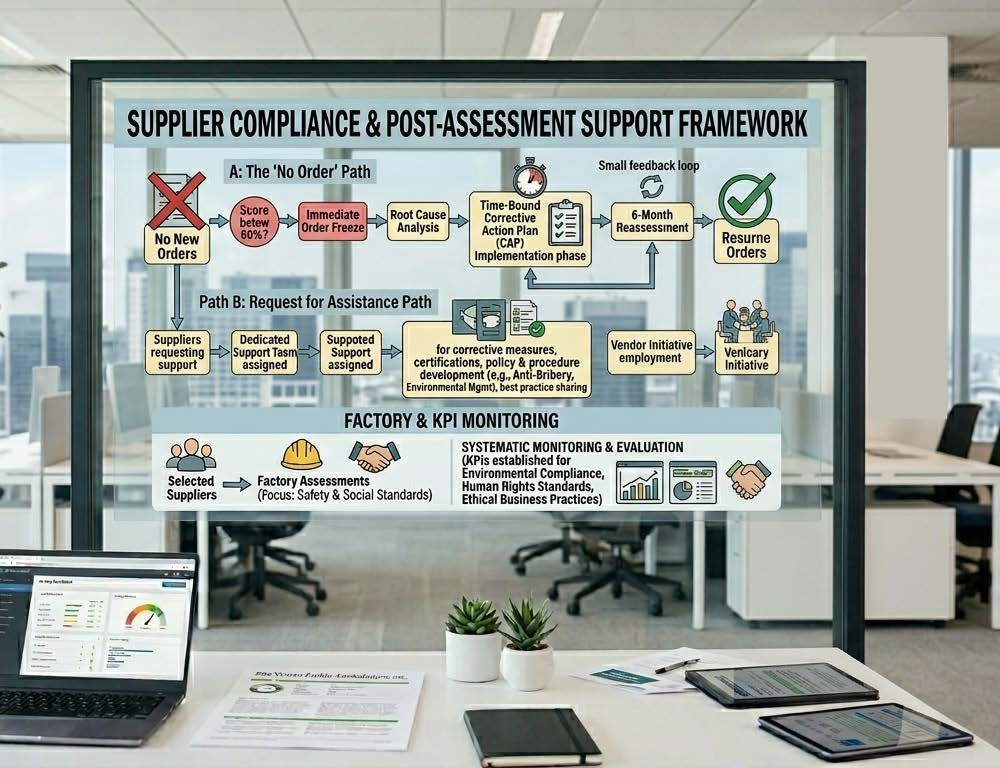
Suppliers scoring below 60% on ESG parameters are not considered for further engagement, and no orders are placed until compliance is achieved. These suppliers are supported through time-bound corrective action plans for improvement, feedback loops, and reassessment after six months. Suppliers requesting assistance are also supported in implementing corrective measures, certifications, development of policies & procedures, vendor initiative deployment, best practice sharing, etc. Suppliers selected post preliminary evaluations undergo factory assessments focusing on safety and social standards. The KPIs established for environmental compliance, adherence to human rights standards, and ethical business practices help us systematically monitor and evaluate supplier performance.
Only those suppliers who meet defined benchmarks were onboarded for engagement and their performance scorecard is shared with them. Suppliers with substantial negative ESG impacts were not terminated directly and are given a chance to address issues through corrective actions within mutually agreed timelines. During such time, no services/products are availed from them.
Assessment Outcomes
- 04 suppliers were identified with substantial actual or potential negative impacts. All were supported through corrective action plans, and 100% compliance was achieved post-intervention
- No suppliers were terminated for non-compliance, as all material breaches were resolved satisfactorily. Adani Energy Solutions’ process allows for no deviation in remediation, suppliers must comply before further engagement
Supplier Assessment Details for FY 2025-26
| Indicators | FY 2025-26 | Targets |
|---|---|---|
| Total number of suppliers assessed through desk and on-site assessments | Desk assessments Conducted for - 100% suppliers On-site assessments Conducted for 100% of eligible suppliers | Desk assessments Conduct for 100% suppliers On-site assessments Conduct for 100% of eligible suppliers (of those who qualify the desk assessments) |
| % of significant suppliers assessed | 73 | 100% by FY 2029-30 |
| Number of suppliers assessed with substantial actual/potential negative impacts | 04 | |
| % of suppliers with substantial actual/potential negative impacts with agreed corrective action/ improvement plan | 100% | |
| Number of suppliers with substantial actual/potential negative impacts that were terminated | Nil | |
| Total number of suppliers supported in corrective action plan implementation | 04 | |
| % of suppliers assessed with substantial actual/potential negative impacts supported in corrective action plan implementation | 100% | |
| New suppliers onboarded | 213 | |
| Number of new suppliers (on whom PO/SO is raised) | 03 | |
| New suppliers who were assessed on environmental and social criteria through Contract Safety Management (CSM) | 100% | 100% |
Supply Chain ESG Maturity
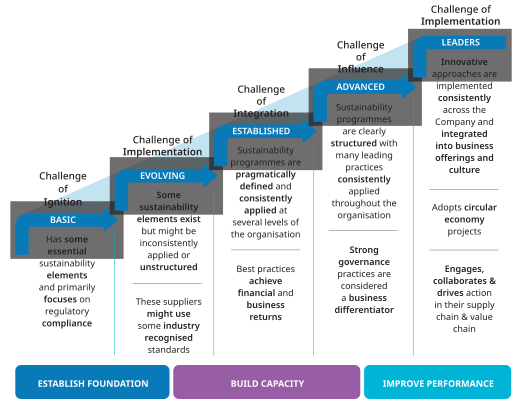
At Adani Energy Solutions, our supply chain Environmental, Social, and Governance (ESG) Maturity Model is designed to systematically assess and enhance sustainability and ethical performance across the supply chain, supporting our market position and reputation. The model is built around defined stages, each reflecting increasing levels of sophistication and effectiveness in integrating ESG principles within the supply chain practices.
Strategic Engagement and Capability Building
Competitive Landscape
The rapidly evolving power Transmission and Distribution (T&D) sector in India is marked by intense competition and stringent regulatory standards. With the entry of major developers and contractors into the market, the need for robust strategies such as competitive bidding, supply-demand gaps, and project timelines, has been heightened. In the smart metering segment, the growing demand for Advanced Metering Infrastructure (AMI) and related technologies calls for robust partnerships with technology providers and manufacturers, achieving operational excellence and maintaining competitive advantage.
Supply Chain Resilience Engagement Initiatives
Pre-Bid Tie-Ups for Critical Equipment
- Strategic pre-bid tie-ups with partners to procure critical equipment such as transformers, reactors, substation equipment, and conductors ensure meeting project deadlines, mitigating supply chain disruption risks
Capability Building and Support to Type-B EPC Contractors
- Providing technical training and skill development programmes for capability expansion
- Offering financial support to execute project smoothly and mitigate cash flow risks
- Facilitating access to advanced tools and technologies for improved efficiency
Managing Supply Chain Environmental Impact
- Require supply chain partners to disclose their carbon footprint reduction, waste management, and resource conservation
- Encourage adoption of eco-friendly technologies and practices
- Monitor and report emissions, energy consumption, and waste management practices
Securing Supply Chain Integrity
- Long-term agreements with reliable supply chain partners to procure uninterrupted supply of critical equipment
- Rigorous quality control measures to uphold high standards for all procured components
Ongoing Supply Chain Engagement
- Open communication with supply chain partners for prompt resolution of issues or concerns
- Regular performance reviews and feedback sessions for continuous improvement
- Driving innovation through collaborative projects and initiatives with strategic supply chain partners
Advancing Social Responsibility in Supply Chain
- Ensuring supply chain partners’ compliance with just working conditions & fair labour practices and human rights standards
- Encouraging community initiatives for the well-being of workforce and local communities
- Supporting diversity and inclusion efforts within the vendor workforce
Supply Chain Partner Onboarding and Management
- Expanded approved supply chain partners list through digitalised and streamlined vendor onboarding processes, ensuring transparency and efficiency
- Setting clear criteria and standards in our vendor selection and management practices, aligning them with our corporate values and sustainability goals
- Comprehensive orientation and training programmes to familiarise new supply chain partners with our operational requirements and expectations
Strengthening Governance
- Require supply chain partners to outline their corporate governance structures, including policies and measures on ethics and anti-corruption
- Ensure transparency, accountability and compliance with contractual obligations through regular audits and assessments
- Promote stakeholder engagement and collaboration on governance-related issues
Supplier Engagement Highlights
In FY 2025-26, we engaged with suppliers representing 73% of our procurement spend, of which 44% reported measurable energy and emission reductions, while 15% are actively cascading ESG practices within their own supply chains. Several partners have also established and disclosed science-based targets aligned with SBTi.
Complementing this, we delivered capacity-building programmes, empowering 04 suppliers, covering 23% of our supplier spend, to enhance their ESG capabilities and performance.
Strategic Partnerships with Type-B EPC Contractors
The non-participation of major Type-A Engineering, Procurement, and Construction (EPC) contractors in competitive bidding made project execution challenging. To bridge the gap, we took a strategic approach to empower the Type-B EPC contractors with manpower and financial support, strengthening their capabilities in large-scale project execution. This reinforced our position as a leading developer in India’s T&D sector, while boosting the market presence and capabilities of Type-B EPC supply chain partners.
Supply Chain Engagement Profile
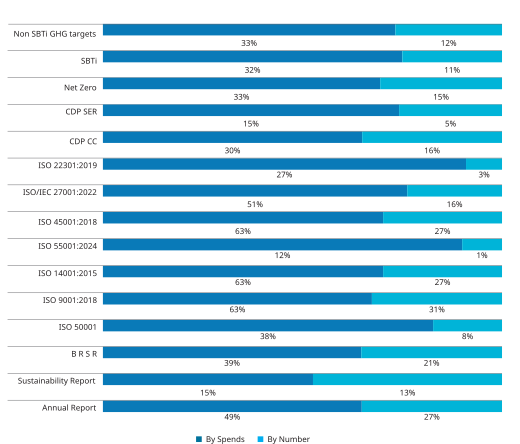
Incentivising Ethical Supply Chains
Adani Energy Solutions has linked supplier incentives with its labour rights objectives to drive tangible improvements in workers’ rights and working conditions. These incentives reward strong performance while encouraging continuous improvement across the supplier base, reinforcing high standards of ethical and responsible labour practices.
Types of Performance Incentives
- Preferential access to long-term contracts
- Public recognition for exemplary performance
- Capacity-building support
- Reduced auditing frequency for consistently compliant suppliers
- Achieving Key Performance Indicators (KPIs)
Key Performance Indicators for Supplier Incentive Measurement
 |
 |
 |
 |
|---|---|---|---|
| Zero incidents of forced labour or child labour | Number of substantiated cases identified in supplier audits | Annual supplier audit reports | Percentage of suppliers maintaining zero incidents year-over-year |
| Compliance with minimum wage and working hour regulations | Percentage of supplier workforce paid at or above legal minimum wage and within regulated working hours | Payroll audit and worker interviews | Trends in non-compliance findings and corrective actions closed |
| Worker representation and collective bargaining access | Proportion of suppliers with recognised worker collectives and collective bargaining agreements (CBAs) | Supplier self-assessment and union feedback | Increase in supplier sites with active CBAs |
| Effective grievance mechanism implementation | Existence and utilisation rate of grievance channels at supplier sites | Review of grievance logs and worker surveys | Resolution rate of grievances filed vs. total received |
| Training on safety and labour standards | Percentage of supplier employees trained annually | Training attendance records | Year-on-year increase in training coverage |
| Health and safety incidents | Number of lost time injuries and serious safety incidents per supplier | Incident reporting and verification | Reduction in incident rates over time |
| Timeliness of policy change communication | Average days notice given for operational or policy changes | Worker and supplier feedback | Adherence to minimum 30-day notice requirement |
Capacity Development
Orientation Programmes
- New supply chain partners and employees undergo comprehensive orientation on operational requirements and sustainability expectations
Skill Development
- Technical training, e-learning resources and expert-led workshops expand internal and supplier capabilities on ESG integration, risk management, and innovative procurement practices
Continuous Learning
- Regular updates and training sessions ensure teams remain informed of evolving standards and policy changes
- Periodic assessments and feedback loops refine the training effectiveness
During the year, Adani Energy Solutions rolled out SEBI’s BRSR core templates for suppliers contributing to 1.5% or more and collectively contributing to 85% by spends value in the reporting period.
Planned Priorities for the Upcoming Years
Cover all critical Tier-1 suppliers through on-site third-party assessments
Transition to SEBI’s BRSR framework for supply chain partners, requiring comprehensive ESG disclosures with at least limited assurance/assessments
Provide continuous support to suppliers in disclosing and achieving science-based targets initiative (SBTi), emissions reductions, and resource conservation
Sustain high levels of local procurement while fostering innovation through collaborative projects and strategic partnerships
Supplier On-Site Assessment Parameters
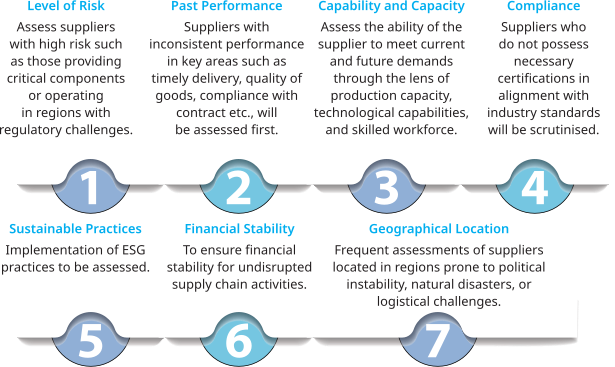
Supplier Grievance Redressal
Adani Energy Solutions has established multiple grievance channels to ensure that all suppliers and workers in the supply chain can raise concerns or complaints confidentially and without fear of retaliation. We raise awareness about these channels through training sessions and encourages their use to promote open communication and address issues proactively. All grievances submitted through these channels are treated with the utmost confidentiality and regularly reviewed through a structured governance process. The mechanism is periodically updated through stakeholder feedback, awareness programmes and training to ensure it remains effective and accessible. These measures reinforce our commitment to human rights, promoting fair labour practices, and a responsible supply chain.
Grievance Channels
- Email at whistleblower@adani.com with the subject “Protected Disclosure under the Whistle Blower Policy”.
- Online submission portal on the Adani Energy Solutions’ website
- Written submission in a closed and secured envelope and superscribed as “Protected Disclosure under the Whistle Blower Policy” addressed to The Chairman’s Office, Adani Corporate House, Shantigram, S G Highway, Khodiyar, Ahmedabad – 382 421 (Letter should either be typed or written in a legible handwriting in English, Hindi or Gujarati)
- Dedicated helpline number operational during business hours for verbal reporting
- Physical drop boxes set up by supplier at their locations for written grievances
- Grievance reporting during regular supplier meetings and audits
Transparent Resolution Framework
All grievances are formally logged and escalated to the Grievance Redressal Committee, comprising representatives from Compliance, Procurement, and Human Resources. The committee is responsible for:
- Conducting fair and thorough investigations for all grievances
- Engaging with relevant parties, including suppliers and affected workers
- Ensuring that appropriate remedial actions are recommended and implemented
- Monitoring the resolution process and following up to prevent recurrence
- Reporting grievance data, outcomes, and key learnings to senior management
- Disclosing relevant information in Adani Energy Solutions’ annual sustainability report, where appropriate