
Accelerating Intelligence Across the Energy Ecosystem
Execution consistency is fundamental as systems evolve across the lifecycle
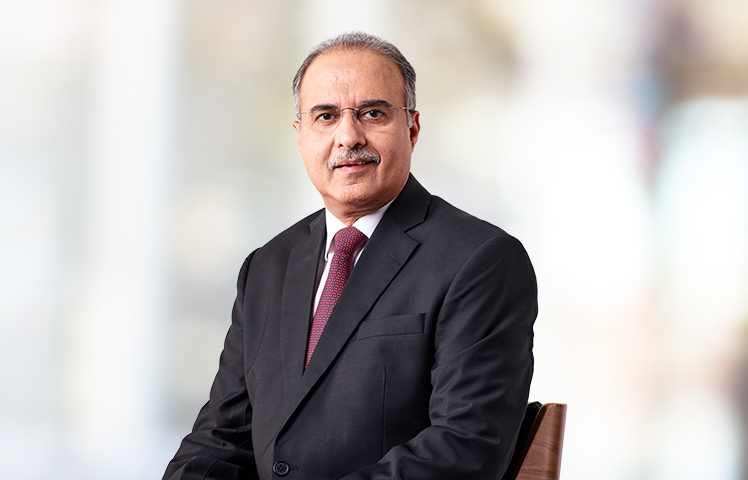
- Anil Sardana
Dear Shareholders,
The evolution of the energy sector has increasingly required a more structured and forward-looking approach. It is no longer sufficient to expand infrastructure in isolation; the way it is planned, executed and managed must evolve in parallel. At Adani Energy Solutions, this has meant strengthening our ability to scale infrastructure, while steadily integrating intelligence into our processes to improve decision-making, responsiveness and control. In many ways, this reflects our approach of ‘Accelerating Infrastructure. Leveraging Intelligence.’ Execution consistency remains fundamental as our systems evolve across the lifecycle. This continues to guide how we design, operate and refine our systems to deliver reliable and sustained outcomes.
What is Changing in the Energy Sector is the pace of Expansion and the Way Systems are Required to Respond to Increasing Interdependencies.
The global energy landscape is undergoing a structural shift, from the traditional molecular energy paradigm (coal, oil, gas) to an increasingly electron-based system (electricity). Across everyday uses like cooking (induction cooking), mobility (electric vehicles), industrial processes and high-temperature furnaces (electric arc furnaces), electrification is replacing combustion-based systems, which deliver superior outcomes while also facilitating the integration of renewable energy sources. Beyond decarbonisation, the shift also reshapes nation’s energy security. Electrification reduces dependence on imported fossil fuels and allows energy systems to rely more on domestically generated renewable power.
The operating context for the sector continues to evolve with strong underlying drivers shaping long-term demand. India’s electricity consumption is expected to grow significantly, supported by rising electrification, urbanisation and emerging demand from data centres and digital infrastructure. Installed capacity is projected to approach ~1,000 GW by FY 2031-32, with investments exceeding USD 500 billion across the energy value chain. This expansion is accompanied by rapid growth in renewable energy, with targets of 500 GW by 2030, increasing the need for robust transmission networks and flexible grid management.

Integration of intelligence is shaping how we plan, execute and manage assets over time. Tools such as LiDAR and satellite-based route optimisation are improving speed and accuracy in project development, while data-led forecasting is bringing greater discipline to cost management and decision-making.
At the same time, peak demand is expected to rise to ~388 GW by FY 2031-32, requiring a balanced mix of baseload and renewable capacity. Together these trends are creating substantial opportunities across transmission expansion, distribution privatisation, smart metering adoption and newer solutions such as cooling and integrated energy services.
Your Company lies in the midst of enabling this transition. Through our multiple businesses like transmission, distribution, smart metering, centralised cooling, and eenergy solutions platform, we are leading the change across levels in this journey.
Our Value Chain Reflects the Integration of our Business Lifecycle with the Stakeholders who enable it.
Over time, we have built and operated our business through a better connected system. Planning is increasingly informed by operational insights and stakeholder requirements, enabling sharper participation in opportunities such as transmission expansion, where the sector presents a long-term pipeline of over ₹ 9.15 trillion, with a near-term tendering opportunity of ~₹ 1.50 trillion at Request for Proposal (RFP) stage. The continuity is reflected in execution, where our transmission business today operates a network of over 27,949 ckms, supported by a strong orderbook with capex visibility.
The same execution capability has enabled rapid scaling in smart metering, where our portfolio of 24.6 million meters, with a revenue potential of ₹ 295.19 Bn over the contract period, is being deployed at increasing pace, supported by a strong order pipeline and expanding market share.
As these assets move into operations, maintaining visibility and control becomes essential. Our systems are supported by digital capabilities that enable real-time monitoring across geographies, contributing to consistently high network availability of 99.70%. This is equally reflected in our distribution business, where operational improvements have strengthened reliability and expanded the regulated asset base to over ₹ 10,521 crore, while continuing to serve a growing consumer base.
This interconnected approach continues to extend into emerging areas such as cooling and integrated energy solutions, where evolving customer requirements are addressed through customised offerings. With an identified market potential of ~963,000 TR (Tonne of Refrigeration) in cooling and 80 GW demand in energy solutions platform, these businesses are being developed as part of the next phase of growth.
Our approach extends beyond the business lifecycle into our engagement with the stakeholders of the ecosystem. Their role has become more pronounced as system evolves. Our engagement is developed across the lifecycle, where inputs, feedback and alignment continue to shape decisions at every stage. This reflects our close alignment with the stakeholders to improve execution outcomes, strengthen operational stability and enable long-term visibility for our investments. Partnerships, in particular, play a critical role across the value chain, supporting us from bidding and financing to execution and operations. These continuous engagements ensure that stakeholder alignment remains embedded within the system and contributing to our sustained value delivery.
Business Excellence at Adani Energy Solutions Lies in the Consistent Alignment of Execution, Operations and Long-term Performance.
Our strong execution capabilities and a well-integrated partner ecosystem enable consistent delivery across projects, even as the scale and complexity of operations continue to expand. Digitally enabled systems have become central to this approach, strengthening visibility, control and responsiveness across the network. Real-time monitoring through the Energy Network Operations Centre allows us to manage operations across geographies with precision.
Integration of intelligence is shaping how we plan, execute and manage assets over time. Tools such as LiDAR and satellite-based route optimisation are improving speed and accuracy in project development, while data-led forecasting is bringing greater discipline to cost management and decision-making. At the same time, continuous asset health monitoring and analytics are enabling earlier interventions, helping extend asset life and maintain performance consistency.
Taken together, the capabilities are moving us towards a more predictive and lifecycle-driven model, where infrastructure is managed with greater foresight, ensuring stability, reliability and long-term value creation.
As we Scale, the Strength of our Performance Becomes more Defined.
Our performance during the period reflects a business that continues to scale with discipline while strengthening the quality of its earnings. Consolidated operational revenue stood at ₹ 18,296 crore in FY 2025-26, supported by project commissioning and rising contribution from smart metering. EBITDA increased at a faster pace of 12.7% to ₹ 8,726 crore, while adjusted PAT grew 32.3% to ₹ 2,393 crore, indicating improving operating leverage as assets stabilise and newer businesses gain traction. Cash profit stood at ₹ 4,700 crore, reinforcing the strength of our underlying cash flows even as we stepped up capital expenditure to ₹ 14,232 crore to support the next phase of growth.
Our capital management approach remains aligned to sustaining growth while preserving financial strength. Net debt to EBITDA remains in a calibrated range of 4.5x, supported by strong and predictable cash flows. Our credit profile continues to remain robust, with an international investment grade rating BBB- (Fitch) / Baa3 (Moody’s) and domestic ratings of AA+/Stable. Active liability management, including bond repurchases and planned refinancing, reflects our focus on optimising the cost of capital while maintaining balance sheet flexibility.
Our Approach to Responsibility is Built into the System, not Added Around it.
As we build and operate infrastructure at scale, we consider efficiency, durability and environmental impact at every stage. This comes from disciplined planning and management of our systems. Over time, this approach improves control, enhances asset performance and ensure that growth remains aligned with long-term system stability.
The intent, henceforth, reflects in tangible progress. Our ESG ratings continue to improve across global benchmarks, moving ahead of industry averages and indicating a strengthening of governance and operational practices. Our pathway towards Net Zero by 2050 is supported by clear interim targets on emissions and renewable energy adoption, with increasing renewable share in distribution and enabling mechanisms such as green tariffs for customers. Parallelly, initiatives such as supplier engagement for decarbonisation extend this responsibility beyond our immediate operations. Together, these efforts reflect a system where responsibility is reinforced through execution and validated through outcomes.
Progress is the Readiness to Deliver.
Driving disciplined growth, expanding energy solutions, and delivering consistent value, aligned with our vision to enrich lives, create sustainable impact, and contribute to nation building. This commitment continues to guide our journey ahead and shape the way we create value across our ecosystem.
To this extent, I would like to express my sincere gratitude to our stakeholders for their continued trust and confidence. Their support remains central to strengthening the Adani Energy Solutions’ ecosystem over time, and we remain committed to meeting their expectations through consistent delivery.
As we move forward, our focus remains clear,
To become stronger. To believe with clarity. And to deliver with consistency.
With best regards,
Anil Sardana
Managing Director
Adani Energy Solutions Limited