Zero Repeat Incidents: A Shared Responsibility, Not Just a Target
At Adani Energy Solutions, safeguarding our workforce stands as a foundational pillar of our organisational values and operational ethos. We remain committed to fostering a workplace environment where the safety, dignity, and empowerment of every individual are priorities. Our Occupational Health and Safety (OHS) framework aligns with global benchmarks and integrates proactive hazard surveillance, comprehensive risk mitigation, and the continual enhancement of our systems and practices. By blending holistic healthcare with advanced capability building, multi-layered communication, and visible leadership engagement, we reinforce a culture of accountability and psychological safety.
Key Linkages
Material Topics
Strategic Priorities
Key Risks and Opportunities
Capitals Impacted
 Human Capital
 Social & Relationship Capital
SDGs Aligned
2,24,723
Cumulative safety training hours for employees and workers
▲56,077 [33%] hours more from the preceding year
100%
of employees and workers covered through safety-related training
72.58%
Safety performance indicator score (SPIS) card
Our safety commitment extends beyond our employees, embracing all stakeholders and encouraging them to collaborate in shaping a safer and more sustainable future.


Safety at Adani Energy Solutions
Rooted in a Zero Harm, Culture of Care Mindset
At Adani Energy Solutions, we believe that safety is not just a goal; it is our way of living and working. Our philosophy is built on the principle that the well-being of our people is the ultimate measure of our success.
Our Core Safety Principles


Occupational Health and Safety Management System
Adani Energy Solutions has implemented a comprehensive OHS Management System built on globally recognised standards that complies with and exceeds applicable OH&S legal and regulatory requirements. The system is embedded across operations through consistent governance, documentation, audits, performance evaluation, safety training and compliance.
Our OH&S Management System covers 100% of our workforce, activities and operational sites. This ensures that all our employees, contractors, and subcontracted workers across all our work locations are governed by standard safety protocols and oversight mechanisms.
100% of our business units and operations are externally audited and certified under the ISO 45001 standard. Continuous oversight and regular internal assessments are conducted through the Adani Safety Management System (SMS) and dedicated governance forums.

The Adani Safety Management System
- ISO 45001:2018 (Occupational Health & Safety Management Systems)
- The Group-level Adani Safety Management System (SMS)
- Hierarchy of Controls model for risk management
- Adani Life-Saving Safety Rules (LSSR) for critical risk mitigation
- Industry best practices in transmission, distribution, and infra safety
- Hazard Identification & Risk Assessment (HIRA)
- Permit-to-Work (PTW) systems
- Contractor Safety Management
- Emergency Response & Preparedness
- Incident reporting, investigation and root cause analysis
- Lead and lag indicator tracking (near misses, observations, LTIFR, SR)
- Regular internal and external audits
- Safety training, capability building and behavioural safety programmes
- Digital safety tools and integrated monitoring dashboards
- Visible Felt Leadership (VFL) interventions across sites
- All Adani Energy Solutions’ transmission & distribution assets
- HVDC terminals
- EHV substations
- Project sites (greenfield & brownfield)
- Corporate and regional offices
- Contractor site facilities
- The Occupational Safety, Health and Working Conditions (OSHWC) Code, 2020
- Electricity Act (2003) & Central Electricity Authority (CEA) Safety Regulations
- Factories Act, 1948 (as applicable to specific facilities)
- Environment Protection Act, 1986 (for hazardous operations & emergency preparedness)
- State-level labour safety rules & inspectorate requirements
- Indian Standards (IS) on electrical safety, PPE, lifting & rigging
- Adani Energy Solutions’ employees, both permanent and fixed-term
- Contract workforce and site-based subcontractors
- Third-party visitors and technical personnel, depending on risk exposure
- Project construction (EPC), including transmission lines, substations, HVDC systems, underground cabling
- O&M operations, including live line maintenance, patrolling, and asset management
- Control room operations
- Transport & logistics related to project execution
- Emergency response and disaster readiness
- Community-based engagements where safety risk is relevant
Health and Safety Governance
Core Governance Commitments
- Compliance with and exceeding applicable national OH&S legislation
- Integration of safety from engineering and design to execution and operations
- Rigid application of hierarchy of controls to reduce risks
- Timely corrective actions from audits, proactive reporting, investigations and shared learning from all incidents
- Ensuring adequate resources for OHS excellence
Health & Safety Policy
Adani Energy Solutions operates under the Adani Group’s overarching Occupational Health & Safety (OH&S) Policy, which establishes a unified vision across all business units and embeds safety as a core organisational value. The policy emphasises Zero Harm goal and “Culture of Care” for employees, contractors, stakeholders, and surrounding communities. It reinforces safety as a core value and essential condition of employment.
⊕Read further Occupational Health & Safety (OH&S) Policy
Leadership Oversight and Accountability
Adani Energy Solutions integrates safety at the top leadership level, aligned with the Adani Group’s safety strategy. Safety performance is regularly reviewed through a multi-tier governance model, from corporate leadership at the top to cluster heads and project management teams, to ensure organisation-wide oversight and continuous improvement.
APEX Safety Council
Sets enterprise safety vision and strategic direction
Group Safety Steering Council
Along with the APEX Safety Council, it oversees strategic safety priorities, standards, contractor safety, logistics safety, capability building, and technology integration

Hazard Identification and Risk Assessment
Adani Energy Solutions’ risk assessment approach is guided by a structured, ISO 45001-aligned OHS framework, Adani Group’s OH&S Policy, and Life-Saving Safety Rules (LSSR). This model helps us systematically identify, assess, and mitigate workplace hazards and safety risks across routine and non-routine (high-risk activities). The framework also focusses on workforce competency and continuous improvement through data-driven governance. Hazard profiling is done based on probability, severity, and potential for fatal or serious injury. All hazards are proactively identified through near-miss capture, internal audits, external audits, and mock drills, all of which feed into risk registers.
Routine hazard identification strengthens early risk detection and enables real-time preventive actions. Every high-risk activity undergoes structured evaluation before execution to ensure risk visibility and operational readiness.
- Daily work area inspections, toolbox talks, and pre-job hazard assessments
- Task-based Hazard Identification and Risk Assessment (HIRA) for operations and maintenance activities (including live-line work, substation operations, transmission line patrolling)
- Digital reporting of unsafe acts/conditions, near misses, and observations through structured safety management systems
- Periodic safety walkthroughs and audits by site leadership and HSE officers
- Specific HIRAC / Job Safety Analysis (JSA) is mandatory for energisation, shutdown, hot work, heavy lifting, excavation, confined space entry, emergency repairs, or work at new/temporary sites
- Permit to Work (PTW) system for all non-routine or hazardous tasks
- Emergency scenario assessments to identify risks arising from outages, natural events, faults, or commissioning work
- High-consequence hazards follow definitions used in ISO 45001 and Indian statutory guidelines (CEA Electrical Safety Regulations, OSHWC Code 2020)
Hierarchy of Controls for Risk Elimination and Reduction
Adani Energy Solutions applies a structured, prevention-led strategy using the internationally recognised Hierarchy of Controls, as mandated in the OH&S Policy and Safety Management System. This strategy ensures hazards are addressed at the source, reduces risks to as low as reasonably practicable (ALARP) and supports consistent management of high-consequence risks.
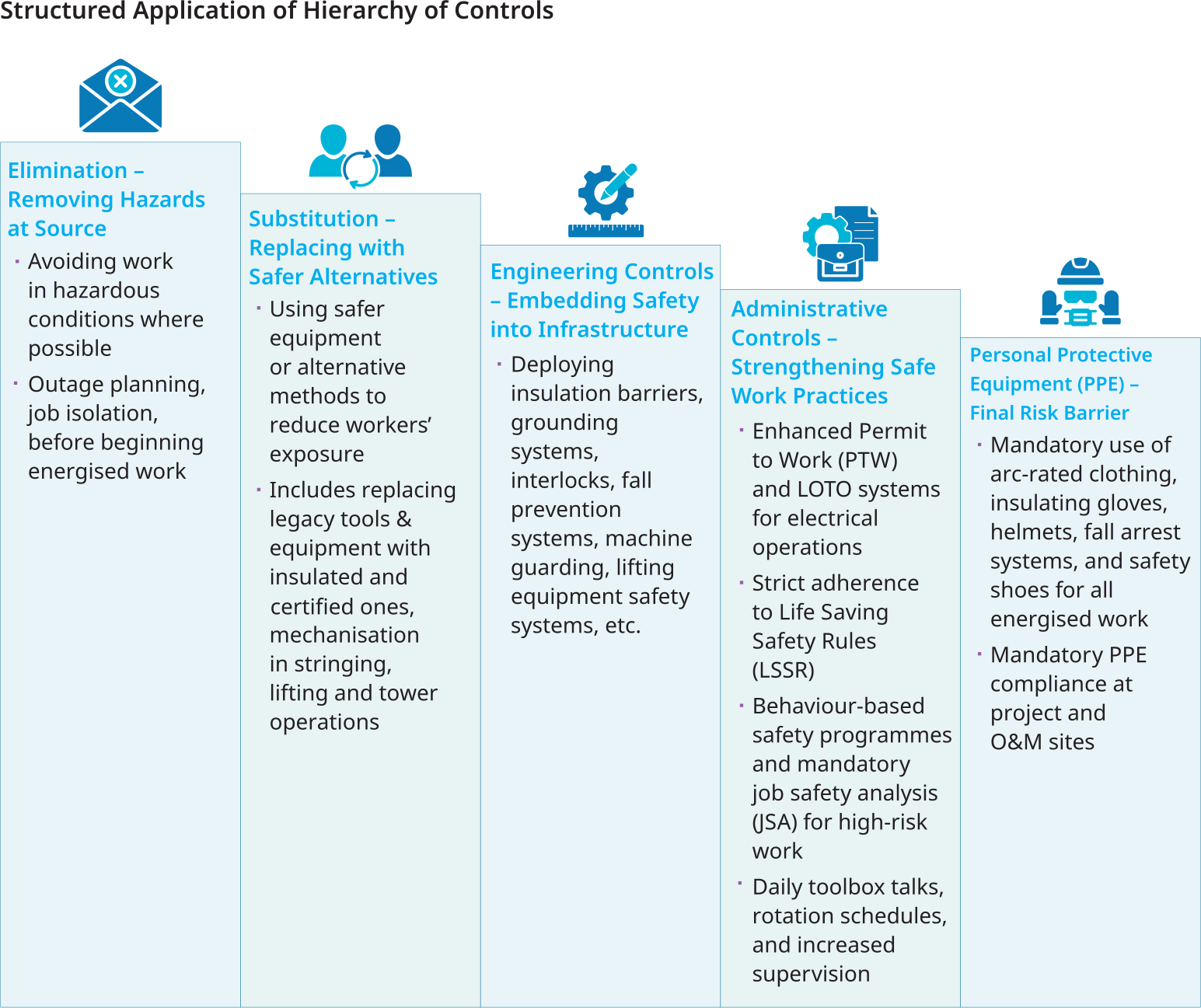
Embedding Quality Assurance
While we appoint qualified and competent HSE personnel and safety leaders to conduct safety risk management, we also enhance and review their capabilities through structured capability-building and assurance mechanisms.
Competency Enablers
Training and Capacity Building Programmes
Cover HIRA PTW, LOTO, electrical safety, emergency management, and incident investigation methodologies
Behavioural Reinforcement
Visible Felt Leadership (VFL) and Behaviour-based safety programmes promote safe behaviours and strengthen frontline risk ownership
Periodic Evaluation
Competency is reviewed through assessments, refresher training, audits, and closure of action items
Incident Management and Response Framework
Adani Energy Solutions employs a rigorous, multi-layered approach to ensure every incident is not just recorded but also serves as a catalyst for systemic strengthening. All incidents are digitally recorded using Adani Energy Solutions’ safety management platform, supported by standardised investigations templates and close-out protocols.
Hazard Reporting and Stop-Work Authority
- Omni-Channel Reporting: Employees and workers, including contractors, can report and raise hazards, near-misses, and unsafe conditions via the Adani Group’s digital safety reporting system, toolbox talks and safety committee meetings
- Dynamic Intervention: Personnel are empowered to escalate or halt work during Permit-to-Work (PTW) briefings, toolbox talks and HIRA reviews, before task execution, if unsafe conditions are identified.
Post-Incident Assessment
Following any incident, an immediate site-level hazard evaluation is triggered to identify:
- Immediate causes: Unsafe acts, equipment failure, or procedural lapses
- Risk re-assessment: Risk levels are assessed using HIRA/HIRAC (Hazard Identification & Risk Assessment/Control) methodologies, to evaluate severity, likelihood and recurrence potential
- Escalation: High-risk or high-consequence hazards are automatically escalated to senior leadership and corporate HSE teams
Incident Categorisation
To enable proportionate investigation and oversight, incidents are classified based on:
- Severity: Near-miss and first-aid case, recordable injury, LTI and fatality
- Activity Type: Working at height, electrical work, lifting, O&M tasks, construction
- Potential Severity: High Potential (HiPo) Incident
Investigation Process
- Root Cause Analysis (RCA): Conducted for all incidents to ascertain underlying causes, contributing factors, and system-level gaps
- Multi-disciplinary Investigations: Depending on severity, investigations involve the site HSE team, line management, subject matter experts, corporate safety leadership (for serious or high-potential incidents) and contractor representatives (for contractor-involved incidents)
Corrective Actions and Monitoring
- Corrective and Preventive Actions (CAPA): Are determined using the Hierarchy of Controls, mandated in the Group OH&S Policy
- Accountability: Every action has defined ownership, deadline, and closure criteria in Adani Energy Solutions’ digital safety system
- Closure Verification: Final closure is verified by HSE personnel, and where required, corporate safety reviewers
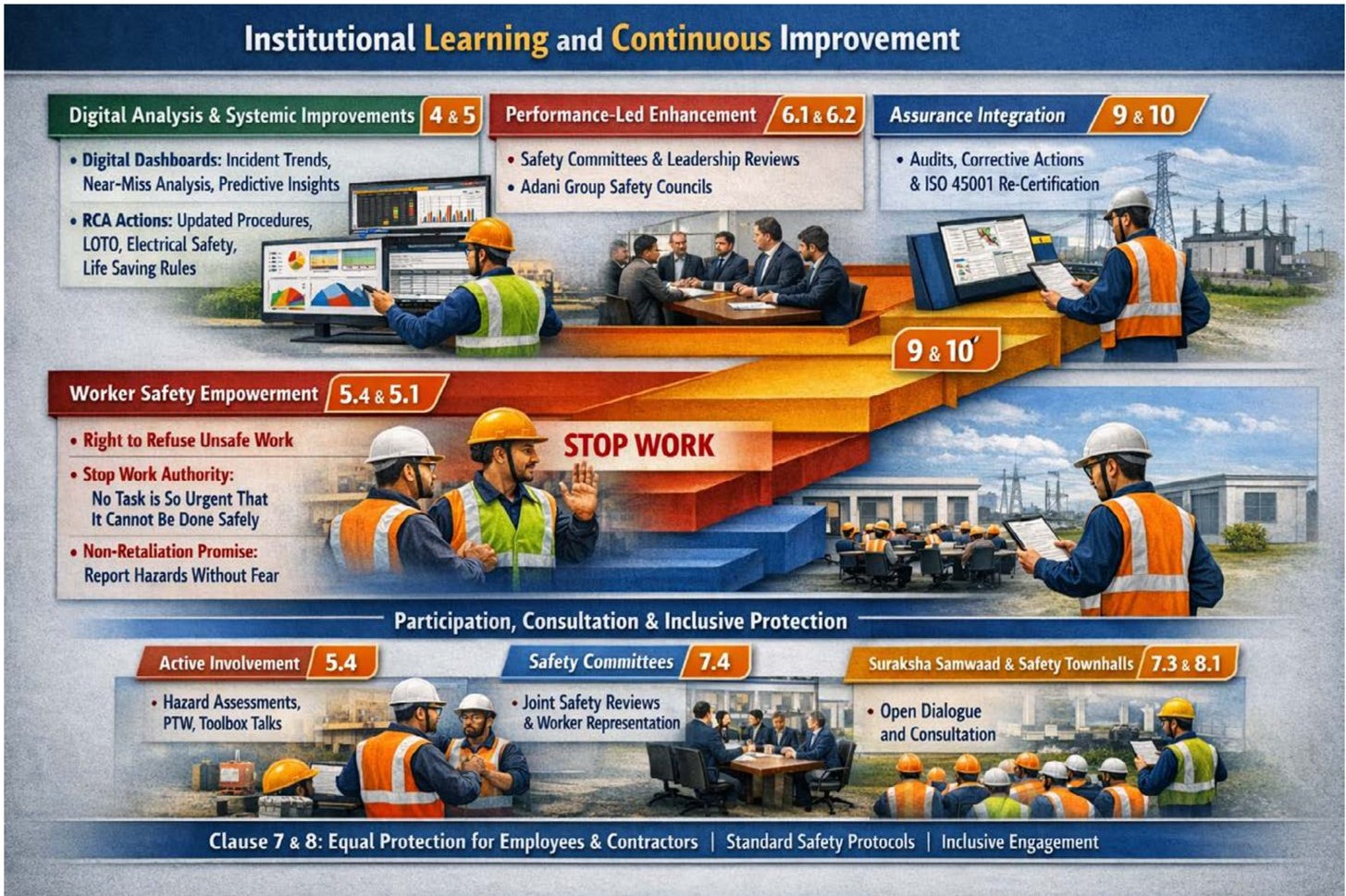
Institutional Learning and Continuous Improvement
Adani Energy Solutions systematically transforms incident insights into enterprise-wide improvement.
- Digital Analysis: Digital dashboards analyse incident data, near-miss trends, and leading indicators (observations, training, audits), highlighting recurring patterns and emerging risks and supporting predictive and proactive improvements
- Systemic Improvements: RCA findings drive updates to procedures (PTW, LOTO, electrical safety, lifting operations), high-risk controls, Life Saving Safety Rules (LSSR) across Adani Energy Solutions
- Performance-led Enhancement: Incident data drives decisions at Safety Committees, leadership reviews, and Adani Group Safety Councils, realigning resources, risk controls, and improvement programmes
- Assurance Integration: Learnings feed into internal audits, management reviews, corrective action programmes and ISO-45001 re-certification cycles
Worker Safety Empowerment and Right to Refuse Unsafe Work
In line with the Adani Group OH&S Policy, Adani Energy Solutions upholds workers’ Right to Refuse Unsafe Work, supported by a firm non-retaliation commitment. Working safely is a condition of employment, and the Group OH&S Policy mandates preventing unsafe situations across all operational stages. The Company reinforces that no task is so urgent that it cannot be done safely. Workers are explicitly expected and encouraged to stop work if hazardous or potentially dangerous conditions are identified, without any fear of reprisals. If a worker believes risk conditions have changed, they are authorised to withdraw from work and request reassessment. Workers can suspend activities and notify supervisors or HSE officers without administrative barriers. Visible Felt Leadership reinforce psychological safety by openly encouraging reporting and acknowledging workers for safe behaviours. Confidential digital reporting platforms and structured safety channels further enable workers to raise concerns without fear of identification or punitive action.
Inclusive Protection
Adani Energy Solutions ensures equal protection for employees and contract workers under the OH&S system, with standardised expectations and zero tolerance for retaliation.
Workers directly influence risk controls, strengthening frontline safety ownership and preventive risk management.
Adani Energy Solutions also consults the workers during the revision of procedures, safety objectives, and risk controls. Platforms such as Suraksha Samwaad, safety townhalls, and monthly safety meetings facilitate workforce consultations, including engagement with workers across remote/linear assets, regarding critical OHS matters. Safety protocols are communicated through daily toolbox talks, digital dashboards, safety bulletins, signage and mandatory induction and refresher training programmes. Contractors receive equal access to Standard Operating Procedures, HIRA findings, PTW requirements and Life Saving Safety Rules.
Formal Joint Safety Committees are established across the project and O&M sites as part of our OHS governance framework. These committees review hazards, incidents, near-misses, OHS KPIs and corrective actions. They also provide feedback on HSE procedures, training needs and emergency readiness, meeting monthly and post-incidents / operational changes.
Participation, Consultation and Communication in OHS
At Adani Energy Solutions, we integrate worker participation as a critical component of our Safety Management System to ensure inclusive decision-making, strengthen risk management and support compliance. Workers, including contractors, actively participate in hazard identification, risk assessments, Permit-to-Work (PTW) processes, toolbox talks, and incident investigations. Safety Committees and workforce representatives contribute to safety reviews, performance monitoring, and improvement planning. Visible Felt Leadership (VFL) interactions further enable direct engagement between frontline workers and senior leaders, strengthening transparency and accountability.
Securing Our Partner Ecosystem and Building Safety Competence
At Adani Energy Solutions, we extend our safety net to every individual within our value chain. Our ISO 45001-aligned OHS standards apply consistently to our contractors, EPC partners, logistics providers, and service vendors. This helps mitigate health and safety risks associated with our partner ecosystem, including electrical safety, working at heights, lifting operations, energised systems, and logistics.
Partner Safety Controls
Partners must meet Adani Energy Solutions’ stringent OHS criteria, safety rules, and competency benchmarks before onboarding.
All partner workers receive mandatory safety induction and fitness assessments.
The hierarchy of controls, including isolation, engineering controls, safe work procedures, supervision, and PPE are applied uniformly to our partners.
Digital safety dashboards, inspections, audits, and Visible Felt Leadership (VFL) interactions align partners’ behaviour with Adani Energy Solutions’ Zero Harm vision.
Empowerment Through Training and Engagement
Knowledge is our primary defence. We provide comprehensive training to all employees and contractors, covering foundational safety and task-specific hazards, aligned with ISO 45001 and the Adani Safety Management System.
 Foundational Excellence
- Every worker undergoes mandatory site induction, covering OHS policies, Life Saving Safety Rules, emergency procedures, and site-specific hazards
- Regular safety sessions, campaigns, and toolbox talks further enhance safety awareness
 Hazard and Activity Specific Training
- Electrical safety, energised work precautions, and PTW/LOTO procedures
- Critical tasks training covering working at height, use of fall-protection equipment, lifting & rigging safety, crane and heavy equipment operations
- Emergency response training covering first aid, rescue drills, and mock drills
- Confined space entry, excavation, fire safety, ergonomics, heat-stress management, rescue operations, and incident investigation
 Safety Engagement
- Suraksha Samwaad sessions are conducted to strengthen safety dialogue and worker participation
Safety Training and Engagement Coverage for Employees and Workers in FY 2025-26
| Indicator | Value | |
|---|---|---|
| Safety training coverage for employees and workers | 60,605 | No. |
| Safety training manhours | 2,24,723 | Man hour |
| Safety training sessions | 3,048 | No. |
| Safety Induction | 11,052 | No. |
| Toolbox Talks | 3,40,440 | No. |
| Suraksha Samwaad | 11,857 | No. |
| Safety concerns (observation + near miss) | 22,189 | No. |
To support early risk detection, exposure control and workforce wellbeing across our operations, we offer Occupational Health Services (OHS) that operate within an ISO 45001-aligned Occupational Health & Safety Management System, supported by the Adani Group’s Safety Management System (SMS).
a. Health Risk Assessments & Medical Surveillance
- Periodic medical examinations, fitness to work assessments, and occupational exposure evaluations
- Occupational health coverage for 100% of Adani Energy Solutions’ workforce, including contractors
b. Monitoring of Occupational Health Indicators
- Close monitoring of work-related illnesses, ergonomic risks, heat stress, fatigue, chemical exposure, and psychosocial factors, with health data informing our hazard identification and preventive action processes
c. Emergency & Medical Response
- First aid facilities, emergency medical response systems, and tie-ups with local healthcare centres for on-site and tertiary medical care
- Emergency response reinforced through regular mock drills and scenario-based preparedness
d. Participation in Incident Investigation
- External OHS professionals participate in root cause analysis (RCA) for incidents involving health impacts, providing specialised expertise on human factors, ergonomics, and exposure-related causes
e. Identification & Prevention Support
- Occupational health teams collaborate with HSE personnel to identify trends in injuries, near misses, and health concerns, with insights contributing to safer work procedures and systemic risk reduction
f. Preventive Training & Awareness
- Comprehensive programmes on ergonomics, fatigue management, electrical safety, working at height, heat stress, and emergency care strengthen preventive health culture
Promoting Workers’ Health
Adani Energy Solutions and the Adani Group extend care beyond occupational hazards through non-occupational medical support and voluntary health & wellness programmes for the entire workforce, including employees and contractors. These programmes address non-work-related health risks, such as cardiovascular conditions, lifestyle-related illness, ergonomics-related strain, stress, fatigue, and general wellness.
- On-site medical facilities, including first aid rooms, and emergency response support at project and O&M locations
- Tie-ups with external hospitals/clinics for tertiary medical care, including non-work-related illnesses
- Provisions for medical response and wellness support are included under Adani Energy Solutions’ ISO 45001-aligned OHS system
- Preventive health screening, including general health checkups and wellness screenings
- Counselling and awareness on lifestyle diseases, ergonomics, stress, and fatigue
- Well-being sessions on personal and holistic wellbeing, aligned with the Group’s “Culture of Care” principle
- Safety and wellness campaigns such as National Safety Week, health awareness drives and wellbeing initiatives to foster a preventive mindset
Ensuring Quality and Facilitating Access
- Integration of governance, audits, standard procedures, and leadership oversight into the Adani Safety Management System ensures high consistency and quality in OHS function delivery
- Regular internal and external audits, and reviews by the Group Safety Council with non-conformities leading to improvements in staffing, equipment, processes, and clinical governance
- Dissemination of health access information through mandatory inductions, workplace displays, safety campaigns, digital platforms, and regular toolbox talks
- Deployment of trained OHS medical professionals, paramedics, first responders, and HSE officers at project and O&M sites
Guarding Privacy, Ensuring Equity
Fostering an environment of trust, Adani Energy Solutions ensures workers’ medical information is protected and handled with strict confidentiality, in alignment with Adani Group’s “Culture of Care” and non-retaliation principles. Our commitment to health is inclusive: all workers, including contract workers, undergo mandatory health & fitness screening prior to site access. We provide equal access to wellness activities at the project and O&M sites, delivered free of cost without discrimination.
Digitisation of Safety Management
We have integrated technology across every layer of our OHS framework, transforming safety from a reactive requirement into a tech-driven, robust shield.

Real-Time Governance
Mobile Reporting Ecosystem: Deployment of mobile apps for incident, near-miss and hazard reporting, ensuring zero lag escalation.
ENOC-Integrated e-PTW & LOTO Systems: Digitised Permit-to-Work (PTW) and Lockout-Tagout (LOTO) workflows to improve accuracy, traceability, and authorisation controls and strengthen energy isolation discipline and reduce human error.

Operational De-Risking
Aerial Surveillance through Drones for transmission line inspections, reducing the need for working at height
Mechanisation and Automation of high-risk tasks, such as tower erection and lifting through cranes
Sensor-based Monitoring for PPE assurance

Cognitive Safety
Virtual Readiness through Interactive e-learning and hazard simulations covering high risks such as work at height, electrical safety and substation safety.
Improved Emergency Response through digitised emergency contacts, response protocols with mass notification systems and real-time location tracking (where possible) for swift rescue operations.
Safety Performance
| Particulars | Classification | FY 2021-22 | FY 2022-23 | FY 2023-24 | FY 2024-25 | FY 2025-26 |
|---|---|---|---|---|---|---|
| Total no. of lost time injuries (Number) | Employees (E) | 14 | 4 | 4 | 2 | 1 |
| Workers (W) | 17 | 1 | 6 | 3 | 5 | |
| Employees + Workers | 31 | 5 | 10 | 5 | 6 | |
| Total no. of fatalities (Number) | Employees (E) | 0 | 0 | 0 | 0 | 0 |
| Workers (W) | 0 | 3 (contract) | 0 | 1 (contract) | 2 (contract) | |
| Employees + Workers | 0 | 3 (contract) | 0 | 1 (contract) | 2 (contract) | |
| Lost Time Injury Frequency Rate (LTIFR) (per million hours worked) | Employees (E) | 0.86 | 0.88 | 0.23 | 0.01 | 0.28 |
| Workers (W) | 0.61 | 0.15 | 0.45 | 0.01 | 0.27 | |
| Employees + Workers | 0.83 | 0.42 | 0.38 | 0.01 | 0.27 | |
| Total Number of man-days lost | Employees + Workers | 18 | 18,001 | 6 | 6,089 | 12,321 |
| Near miss frequency rate (NMFR) for work-related near misses per 2,00,000 hours worked | Employees + Workers | 26.50 | 43.52 | 50.76 | 38.62 | 36.43 |
Note: All employees and contractors are included in OHS reporting. The workforce OHS data has been sourced from Adani Energy Solutions’ MIS (dashboard and supporting month-wise data). Computation methodology aligns with the Global Reporting Initiative (GRI) standard, ISO 45001:2018 and the Adani Safety Management System (SMS). Regular audits and reviews help maintain the integrity of disclosed information, with all assumptions clearly documented, if any, for transparency.
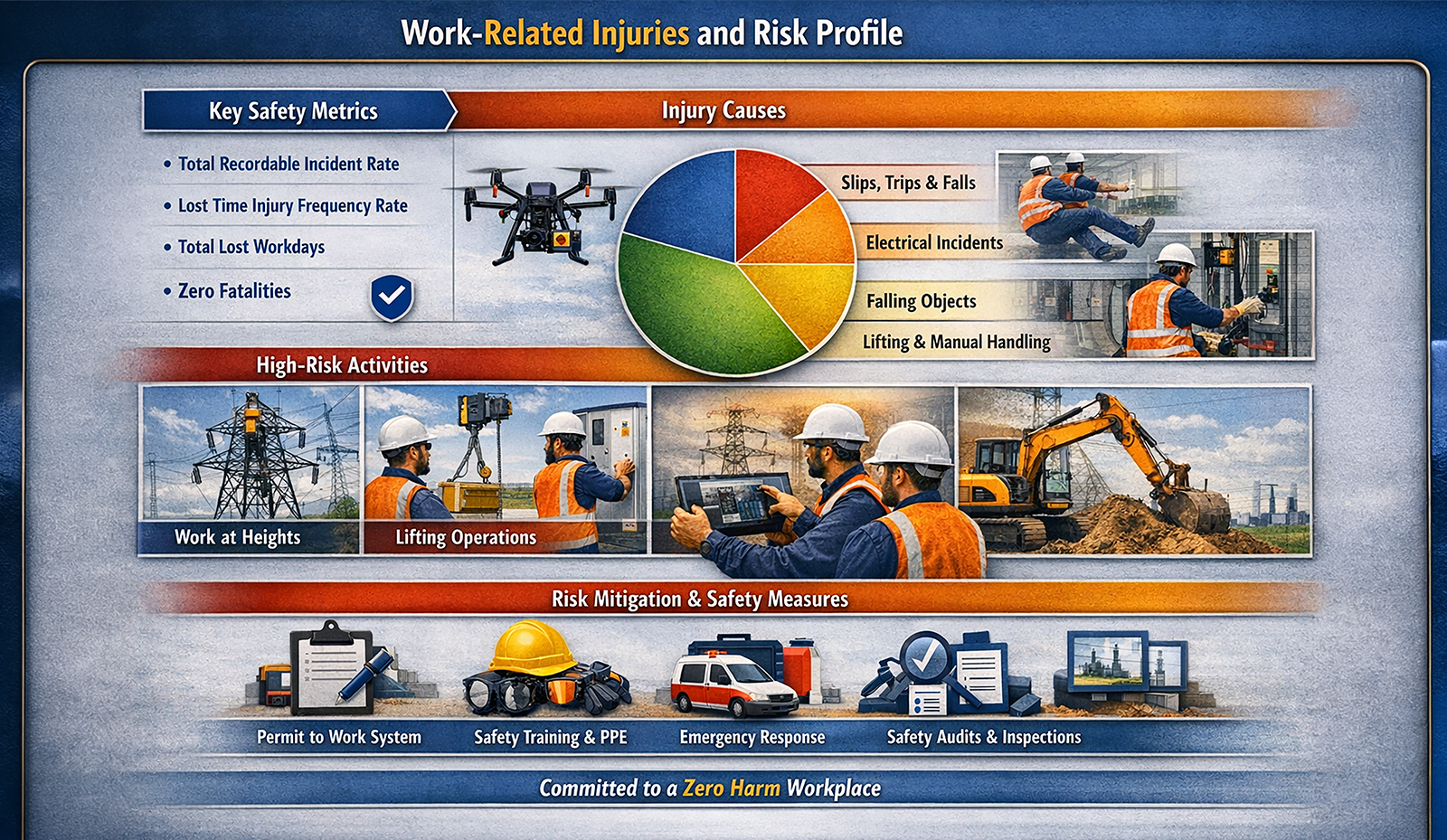
Work-Related Injuries and Risk Profile
- High Consequence Risks: Identified primarily in tower erection (work at height), energised systems lifting/rigging, and complex field maintenance tasks across our transmission & O&M operations. During the reporting period, Adani Energy Solutions recorded zero high-consequence non-fatal injuries.
- Recordable Work-Related Injuries (i.e., Fatality + LTI + FAC) have been calculated from Adani Energy Solutions’ MIS data, where LTI = 1; FAC = 0 and Recordable Injuries = 2 (i.e., 1 Fatality + 1 LTI) and where Recordable Injury Rate stands at ≈ 0.02 per 2,00,000 hours (very low due to high total manhours).
- Total Manhours Worked = 29.13 million manhours across Adani Energy Solutions operations
Work-Related Ill Health
- During the reporting period, Adani Energy Solutions recorded zero fatalities or recordable cases of work-related ill health among the employees and workers, as per our MIS, site-safety records, and ISO-aligned OHS Management System. “Recordable ill health cases” include only conditions medically determined to be caused or significantly aggravated by workplace exposure.
- Surveillance includes fitness to work checks, periodic medical exams, and health screening, enabling early detection of health concerns not classified as work-related.
- We have identified the main types of potential work-related health risks typical to transmission and O&M environments that we proactively control through Occupational Health Services and safety programmes. These include:
- Electrical exposure-related effects
- Ergonomic strain / musculoskeletal disorders
- Heat stress due to field conditions
- Fatigue-related health risks during long-duration or high-intensity tasks
- Dust / environmental exposure in certain project locations
CASESTUDY
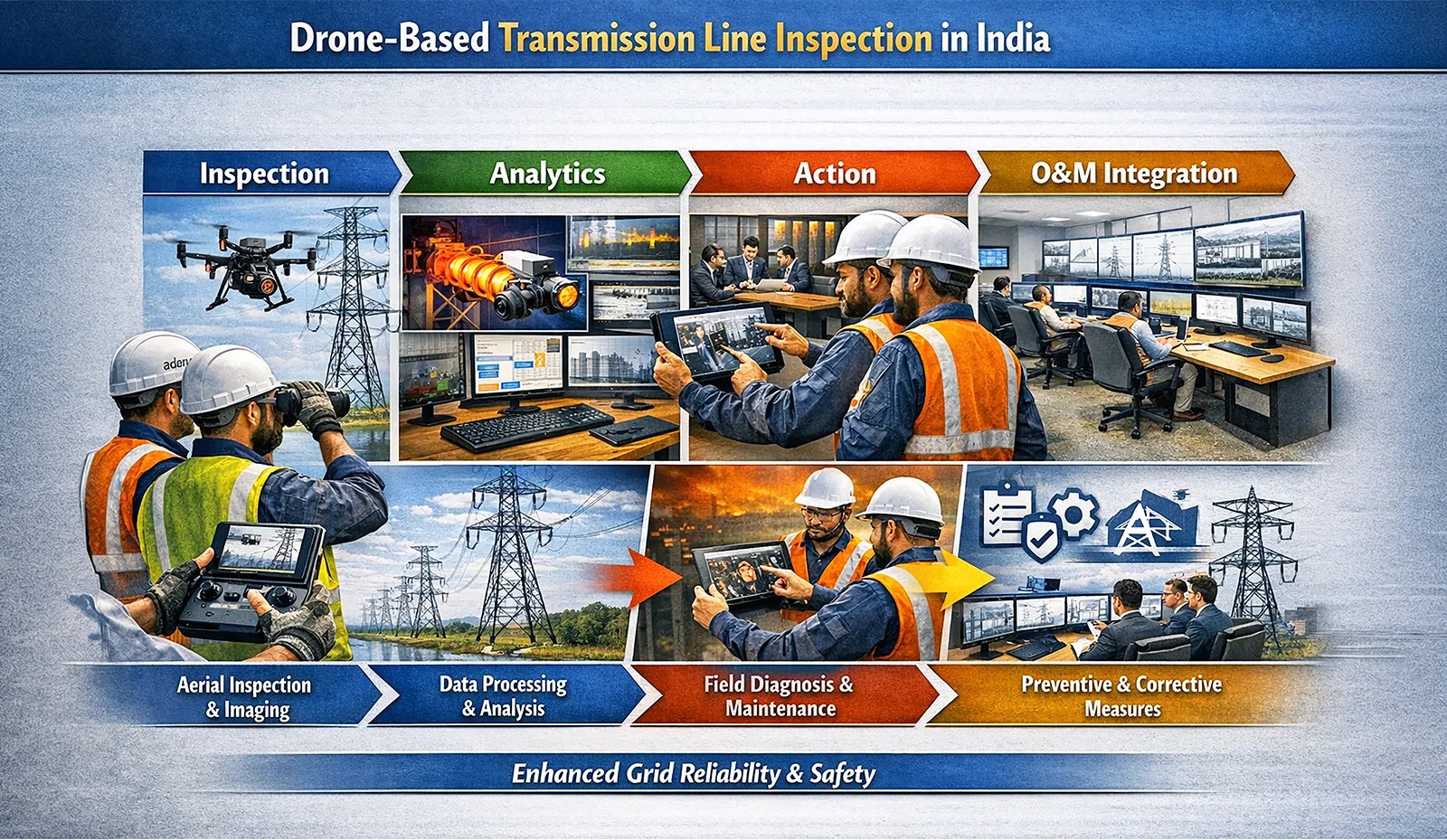
Drone-Based Transmission Line Inspection
Core Challenge
Traditionally, inspection of transmission line (TL) equipment installed atop towers required manual climbing. This led to potential critical friction points, including:
- Safety Risks: High exposure to “work-at-height” and electrical hazards for field technicians
- Operational Lag: Limited access to difficult terrains, increasing the inspection time, delaying defect identification, leading to potential asset failures
- Adverse impact on reliable power supply for local communities
Technological Solution for Aerial Inspection
Adani Energy Solutions transitioned to drone-based inspections, providing high-resolution visuals of difficult and hazardous locations, eliminating the need for physical human ascent. Structured training programmes and standardised inspection protocols helped integrate drone data into existing maintenance workflows.
Implementation Workflow
- Drones equipped with high-definition cameras are deployed for routine patrolling
- Trained operators capture videos and images of insulators, conductors, and tower-top fittings
- Collected data is stored digitally and analysed for any defects, feeding into maintenance planning for timely corrective actions
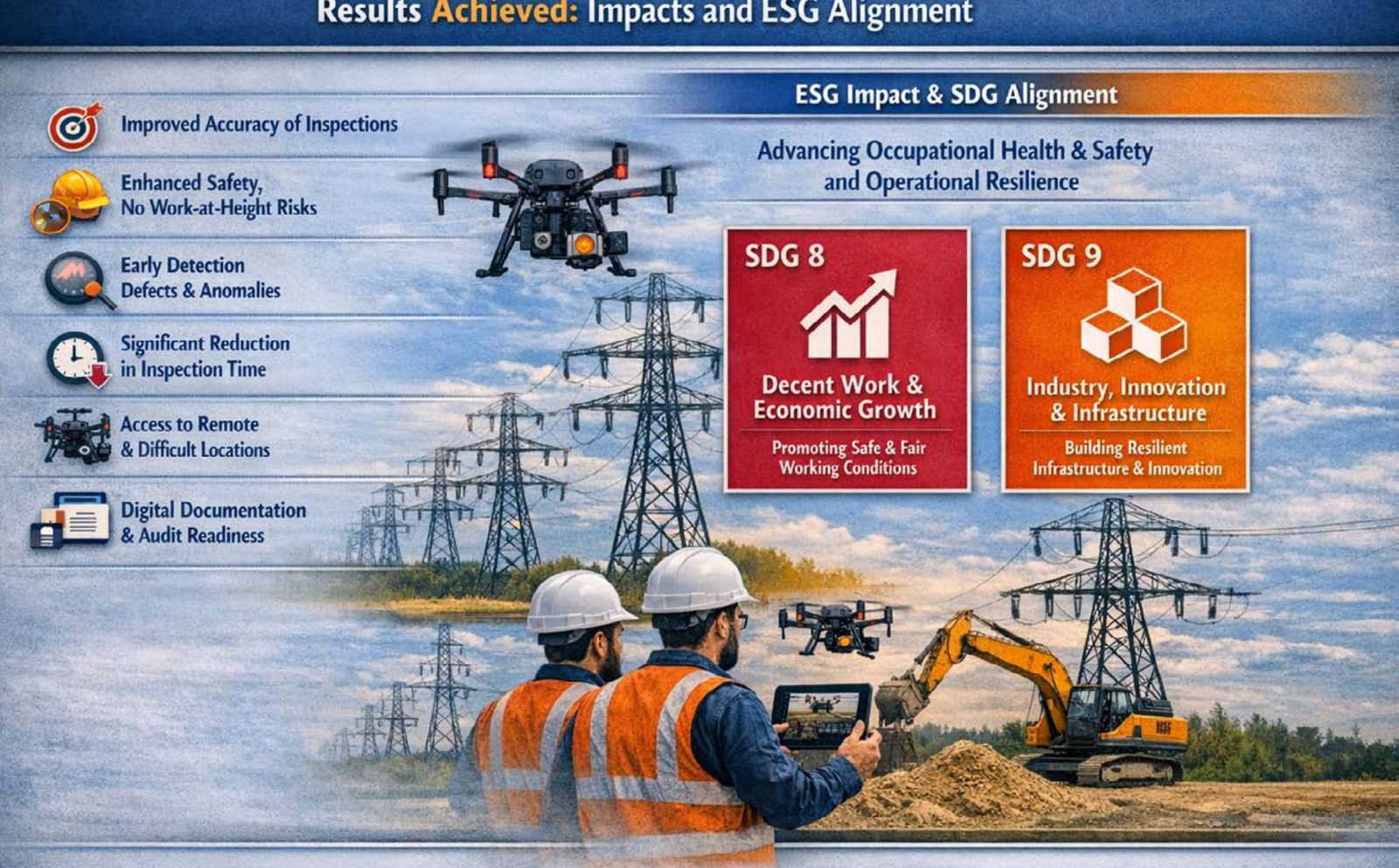
Results Achieved: Impacts and ESG alignment
- Improved accuracy of inspections
- Enhanced safety by eliminating work-at-height risks
- Early detection of defects and anomalies
- Significant reduction in inspection time
- Improved access to remote and difficult locations
- Digital documentation enabling trend analysis and audit readiness
The initiative addresses ESG material issues related to Occupational Health & Safety and operational resilience, directly contributing to SDG 8 (Decent Work and Economic Growth) and SDG 9 (Industry, Innovation and Infrastructure).
Way Forward
Future plans include scaling cross-deployment to all transmission corridors and substations with safety and access challenges, while integrating AI-based image analytics for predictive maintenance.
The adoption of drone inspections has transformed our safety performance and asset monitoring capability by eliminating high-risk manual inspections and enabling faster, more reliable decision-making.
Head Safety